The lesson
Pair the customer story with a fact panel, then explain the workflow change through the exact features the customer uses.
The move
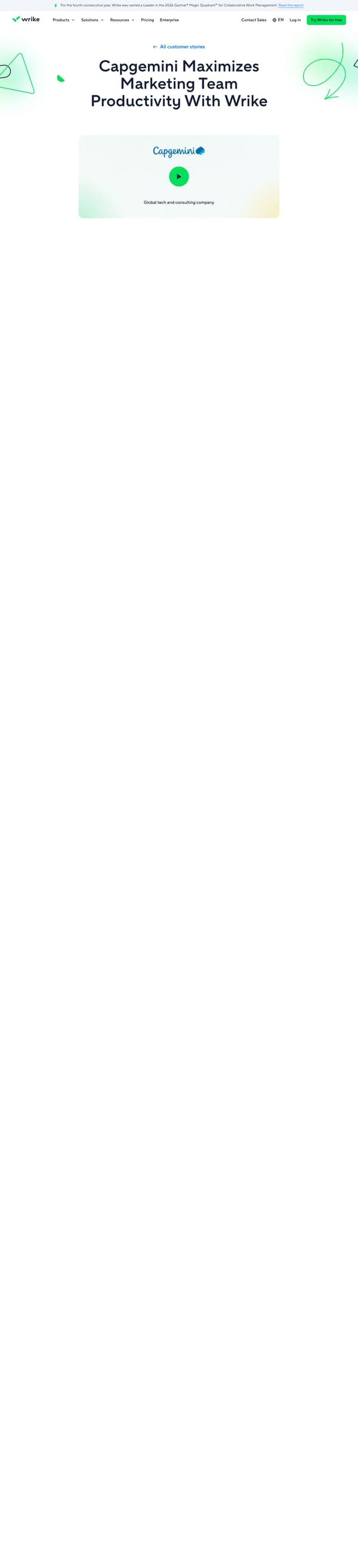
The page opens with a customer-stories back link, the title “Capgemini Maximizes Marketing Team Productivity With Wrike,” and a video card with the Capgemini logo. A fact panel lists Headquarters, Industry, # of Employees, # of Users, Feature Highlights, Departments Using Wrike, Why Wrike, and Top Challenges. The written story moves from “Their story” to “Their victory,” explaining how informal requests became a customized request submission process that feeds work into Wrike. It closes with “Their superpowers,” three feature explanations, a list of features Capgemini uses, and a demo CTA.
Why it works
- Our readThe sidebar facts make the customer, department, users, features, challenge, and reason for choosing Wrike scannable before the story begins.
- Our readThe story names the old intake channels, including email, phone calls, and in-person conversations, so the visibility problem feels operational rather than abstract.
- Our readThe feature section connects Visualization, Workload control, and Reports to specific team behaviors, which keeps the product proof tied to the customer’s workflow.
What not to copy
Don't copy Capgemini's Collaborative Business Experience language, North American Marketing Services context, or the exact intake workflow. Keep the structure of a scannable fact panel, a before-state with specific request channels, and feature blocks that show how the team now works.
More from Wrike
More case studies








Steal it for your brand.
Tell us what you want to make. We’ll talk through how to put these ideas to work for your brand.