The lesson
Put the customer fit and the headline proof before the narrative, then use simple section labels to carry the reader through the story.
The move
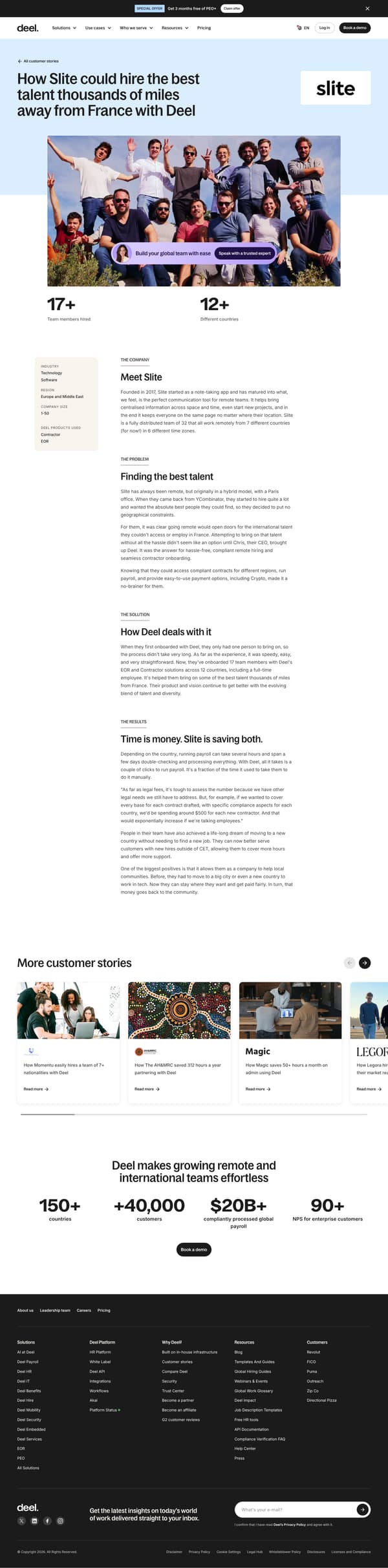
The page opens with “All customer stories,” the title “How Slite could hire the best talent thousands of miles away from France with Deel,” the Slite logo, and a team photo. Beneath it, two stat callouts, “17+ Team members hired” and “12+ Different countries,” sit next to firmographic details and the products used, “Contractor” and “EOR.” The story then follows four plain sections: “Meet Slite,” “Finding the best talent,” “How Deel deals with it,” and “Time is money. Slite is saving both.” It closes with related customer stories and a broad Deel proof bar.
Why it works
- Our readThe opening gives the reader the customer, the hiring problem, and the two headline counts before the story begins.
- Our readThe product tags, industry, region, and company size make the story easy to match to a buyer with a similar hiring situation.
- Our readThe results section mixes saved admin time, avoided legal work, customer coverage, and employee mobility, so the outcome feels broader than payroll.
What not to copy
Don't copy Slite's France context, YCombinator mention, crypto payment detail, or the exact remote-team story. Keep the named-customer arc, the firmographic box, the product tags, and the company, problem, solution, results structure.
More from Deel
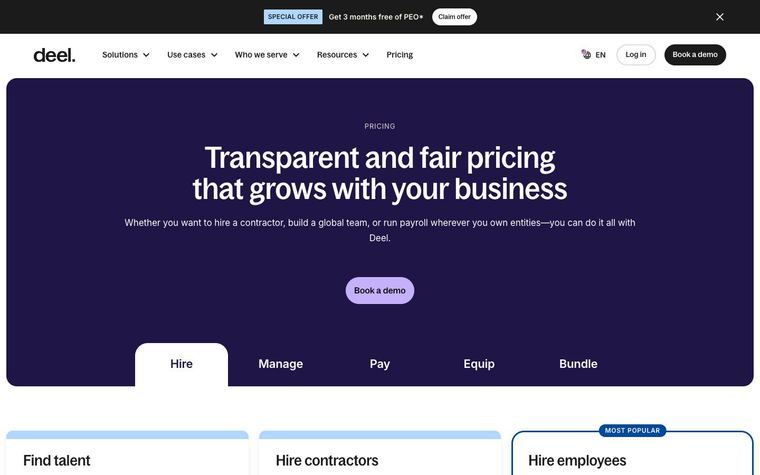
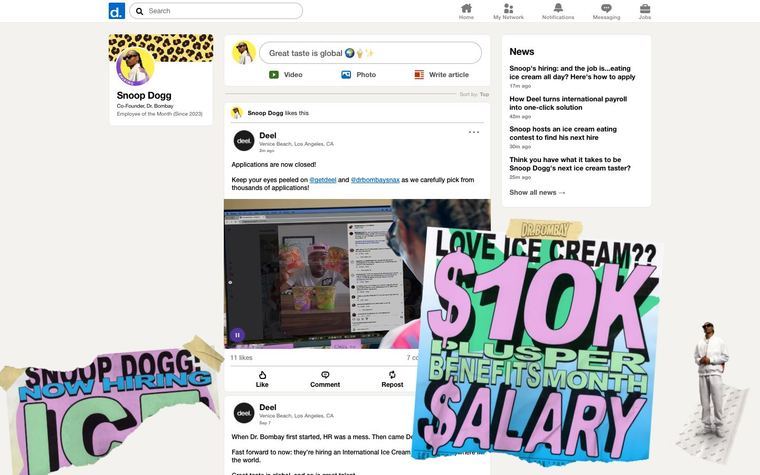



More case studies
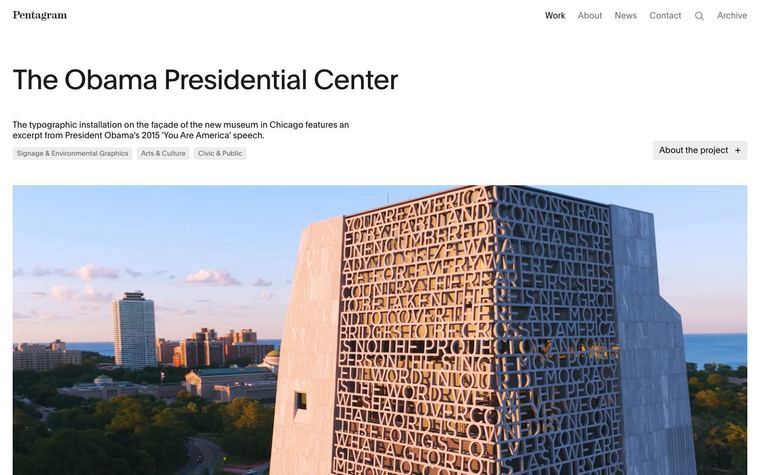
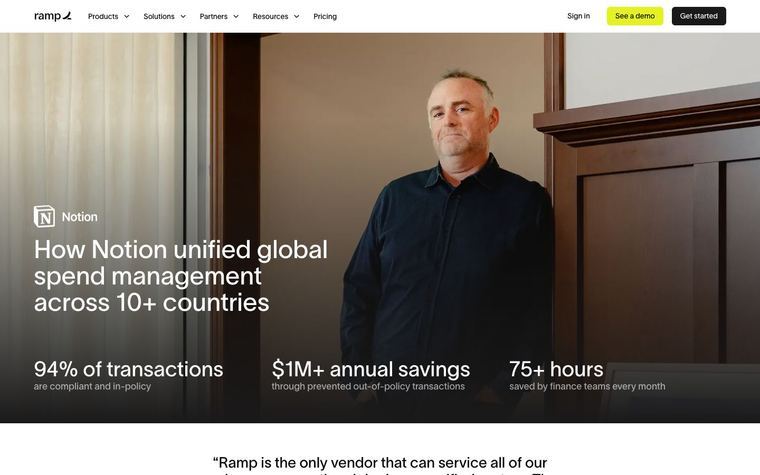



Steal it for your brand.
Tell us what you want to make. We’ll talk through how to put these ideas to work for your brand.