Freedom
Dedicated to free software and content: Fedora chooses free alternatives to proprietary code and limits patent-encumbered code (paraphrase). Published
Brand book
Four values, one shape. Fedora's whole system is the Four Foundations made visible: the logo's bubble becomes the badge for each value, each value gets its own hue, and the spectrum of those hues is the palette. Blue anchors it, the other colors say which part of the community is speaking. Our reading

Which Foundation hue leads. Blue is always the anchor (logo, ink); a piece may take magenta, orange, green or purple as its tint, the way each booklet chapter does, and may add a mascot. The guide sets no limit on how much color; it limits by rule (palette only, logo untouched).
Our engine's setting, built from their rules.
Cover the infinity-f. It should still read as Fedora: a blue gradient field with a diagonal cut, white Montserrat Title Case headline, Open Sans copy, and the blue release circle.
Put another Linux distribution's logo on it. If the Fedora blues, the edition cards with their own marks and the plain, community-first copy don't feel out of place, it's generic, and it goes back.
An innovative platform for hardware, clouds, and containers, built with love by you. Observed
Dedicated to free software and content: Fedora chooses free alternatives to proprietary code and limits patent-encumbered code (paraphrase). Published
A strong, caring community with a place for anyone who wants to help, whatever their technical skill (paraphrase). Published
Fedora cares about excellent software and builds it openly with upstream projects, so every free software user benefits (paraphrase). Published
Committed to innovation: the latest stable, robust, powerful free software, delivered by a rapid release cycle (paraphrase). Published
Your computer, your control: free, no ads, and your data belongs to you (paraphrase of the homepage promise and Workstation page). Observed
It's Your Operating System
100% FREE & OPEN SOURCE
The leading Linux desktop
The next generation personal desktop
Fedora is a community project sponsored by Red Hat, which also owns its trademarks. Its features flow upstream and into other distributions, and its fast release cycle keeps it ahead (Fedora Linux 44 is current, 45 in beta as of 2026-10-30). The current identity is the Infinity design logo; the brand booklet was written by Jess Chitas in 2022 and revised in 2024, and the community mascots were redrawn by intern Lauryn Dake in 2021, with Colúr added for Flock in 2022.
We are dedicated to free software and content: free alternatives over proprietary or patent-encumbered code (paraphrase).
PublishedWe are a strong, caring community; anyone who shares the values can help, at any skill level (paraphrase).
PublishedWe care about excellent software, built openly with upstream for everyone's benefit (paraphrase).
PublishedWe are committed to innovation: the latest stable, robust, useful free software (paraphrase).
PublishedCategory. Free and open source Linux operating system and its community; a platform, not just a distribution (paraphrase). Published
Long-term-stability Linux distributions, which Fedora says serve a different need (paraphrase).Proprietary operating systems, which Fedora aims to equal or exceed with free software (paraphrase).Distributions that bundle proprietary or patent-encumbered components for short-term ease of use (paraphrase).Non-free tooling in how-tos, such as VirtualBox where libvirt/KVM is the Fedora platform choice.
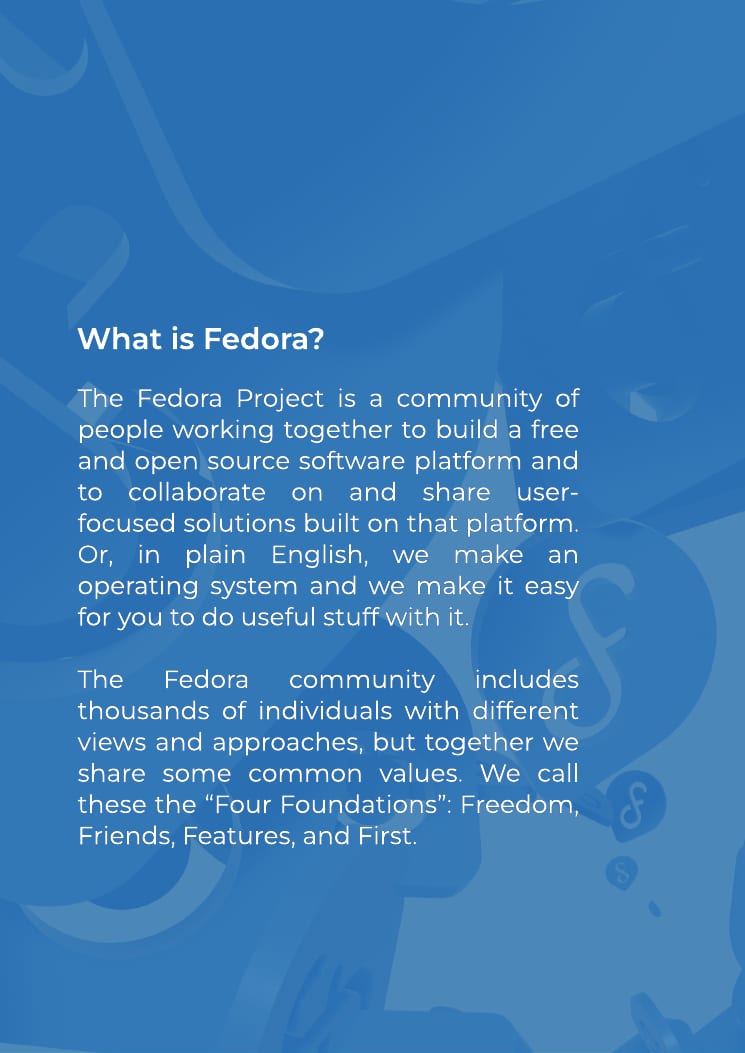
The Fedora Project is a community of people working together to build a free and open source software platform and to share user-focused solutions built on it. In plain English: Fedora makes an operating system, Fedora Linux, and makes it easy to do useful things with it. The community shares four values, the Four Foundations: Freedom, Friends, Features and First. Fedora is sponsored by Red Hat.
It's Your Operating System Observed
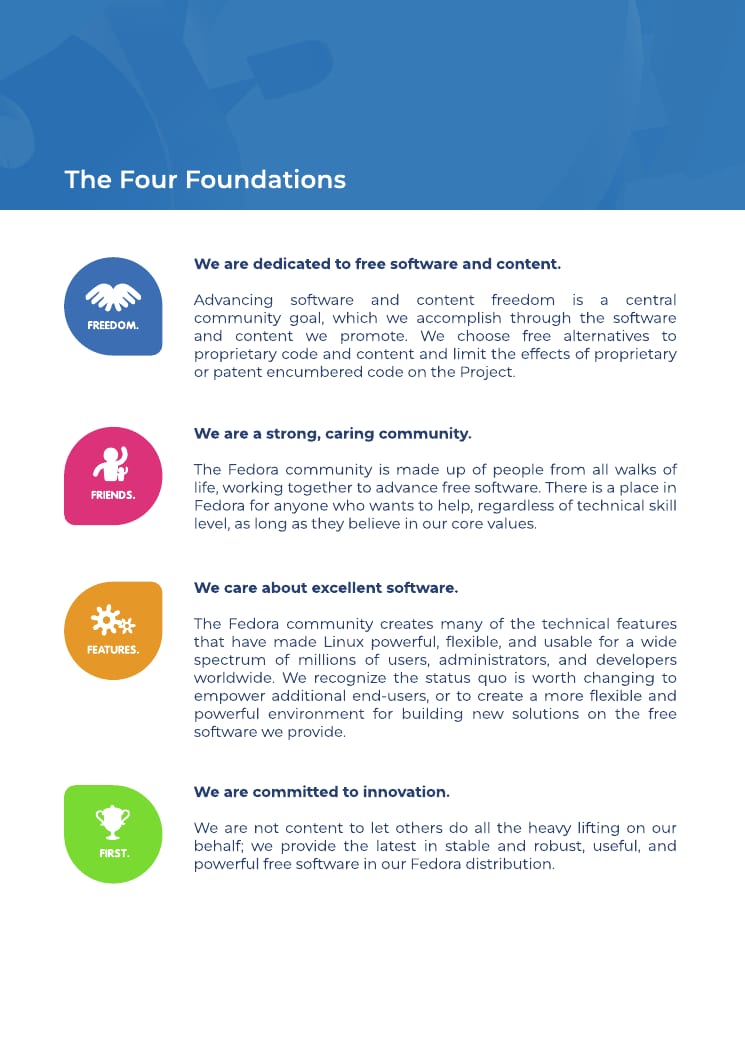
Freedom. Friends. Features. First. Published
built with love by you Observed
The leading Linux desktop Observed
Fedora always aims to provide the future, first. Published
A Community Server OS
The lightweight VM environment
The container optimized OS
The solid edge foundation
The Four Foundations are the message architecture: Freedom, Friends, Features, First. The homepage adds ownership ('It's Your Operating System', 'built with love by you') and proof badges (100% free and open source, Digital Public Good, latest release number).
Source: guide.pdf p.4-5docs.fedoraproject.org/en-US/projectfedoraproject.org
The community is thousands of volunteers; plain, welcoming language keeps the door open to people of any technical skill (p.4-5, paraphrase).
Plain-spokenWelcomingPrincipledPlayful
No voice guide, but a consistent voice in the published copy: formal definition then plain English, 'we' to 'you', warm, inclusive, a little funny, firm on free software. Editorial rules come from the Fedora Magazine writing guidelines: sentence case, short sentences, active voice, present tense, US English, inclusive terms, exact third-party names. Trademark rules govern how anyone writes the name.
communitycontributorsfreeopen sourceupstreaminnovative
whitelistblacklistmaster/slaveRedhatRedHatCOPRFedoras (plural)FC / FDR or any Fedora acronym
| Tone (our reading) | plain-spoken, welcoming, principled, playful |
|---|---|
| Spelling | US English |
| Headings | sentence case |
Not published: brand voice or tone guide; word list for marketing copy.
Source: guide.pdf p.4-5, p.14, p.26docs.fedoraproject.org/en-US/fedora-magazine/writing-guidelinesdocs.fedoraproject.org/en-US/legal/trademarksdocs.fedoraproject.org/en-US/project








The guide's logos are vector art inside the PDF, so source/images holds only the backgrounds and mascots. Official files: fedoraproject.org serves the horizontal lockup as SVG (fedora-logo-official.svg, white version fedora-logo-white-official.svg); every variant is a PNG on docs.fedoraproject.org/en-US/project/_images/logo/ (that host sits behind an Anubis bot check, so a headless fetch may need a real browser); masters live in the Design team's GitLab (gitlab.com/fedora/design/team/logos). Clear space and minimum size are not published. Never take a logo from a search engine (p.10).
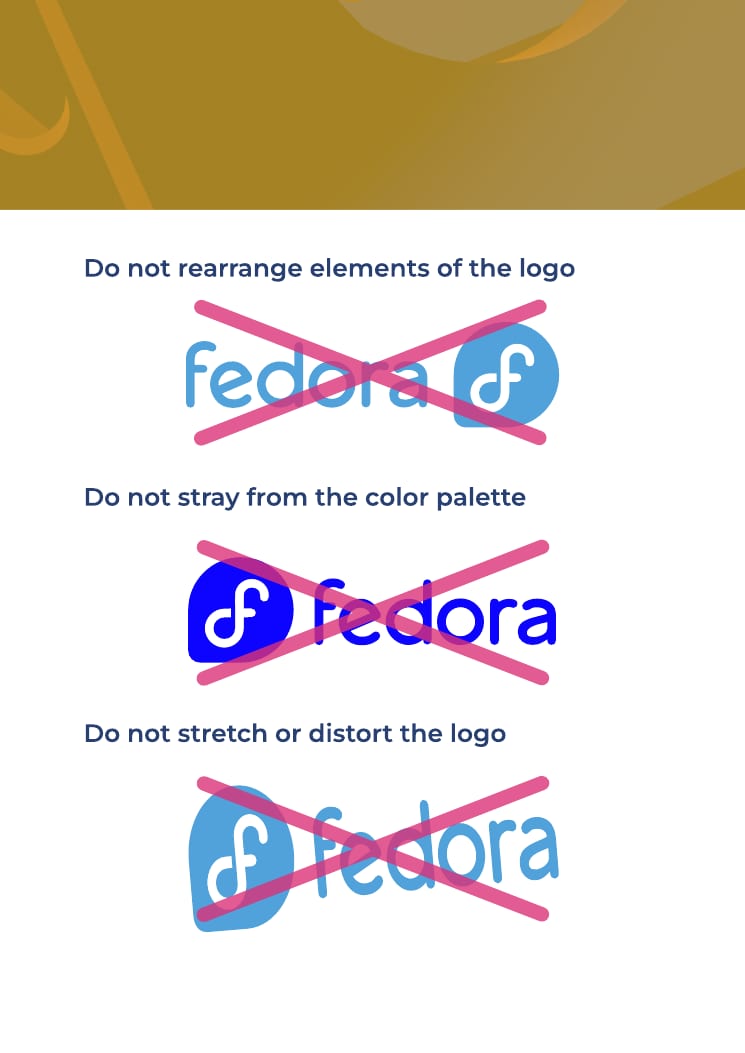
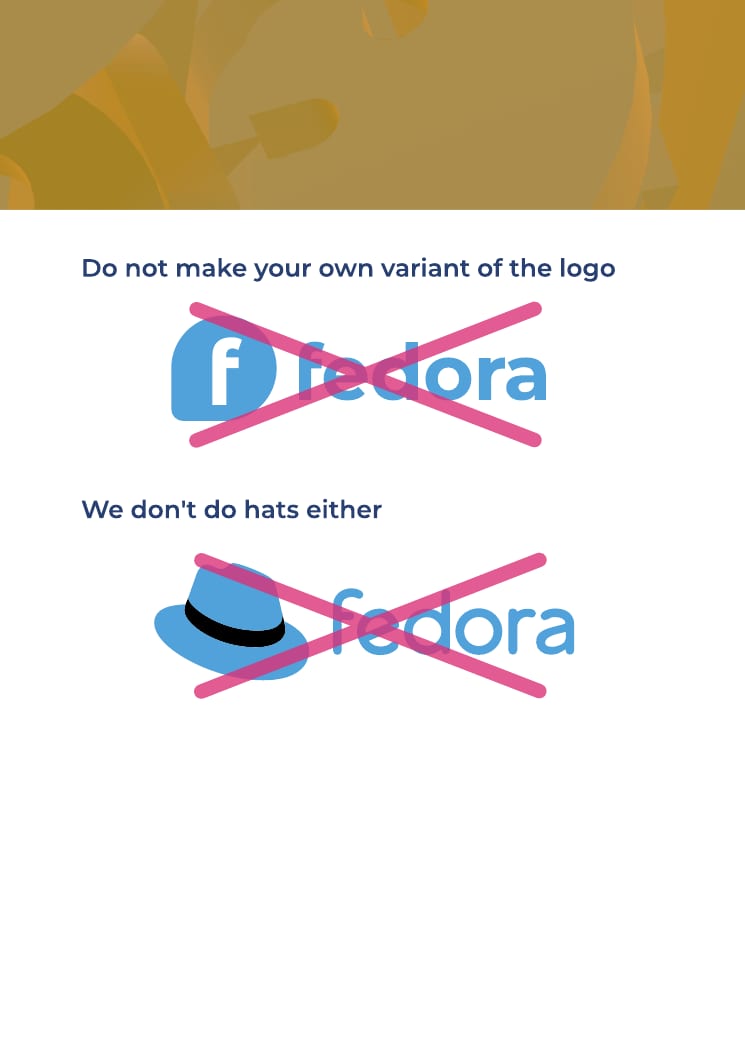
The logo appears on apps, web, shirts, booth cloths, banners and print; small changes compound across a huge community, so consistency is what lets it be taken seriously (p.6, paraphrase).
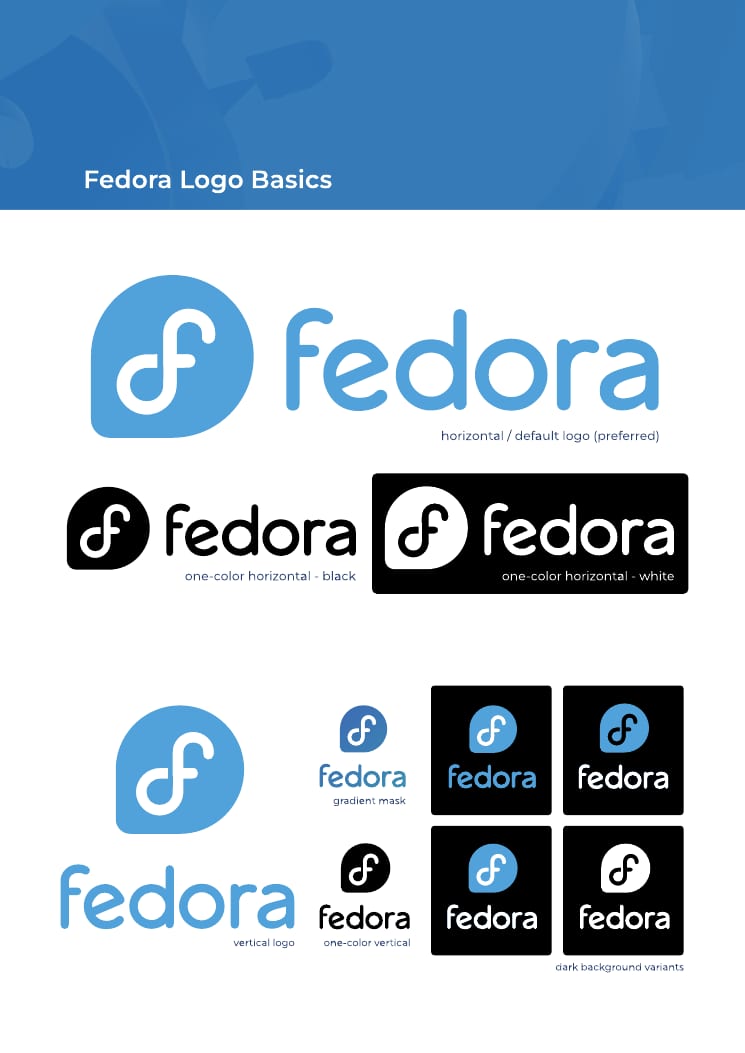
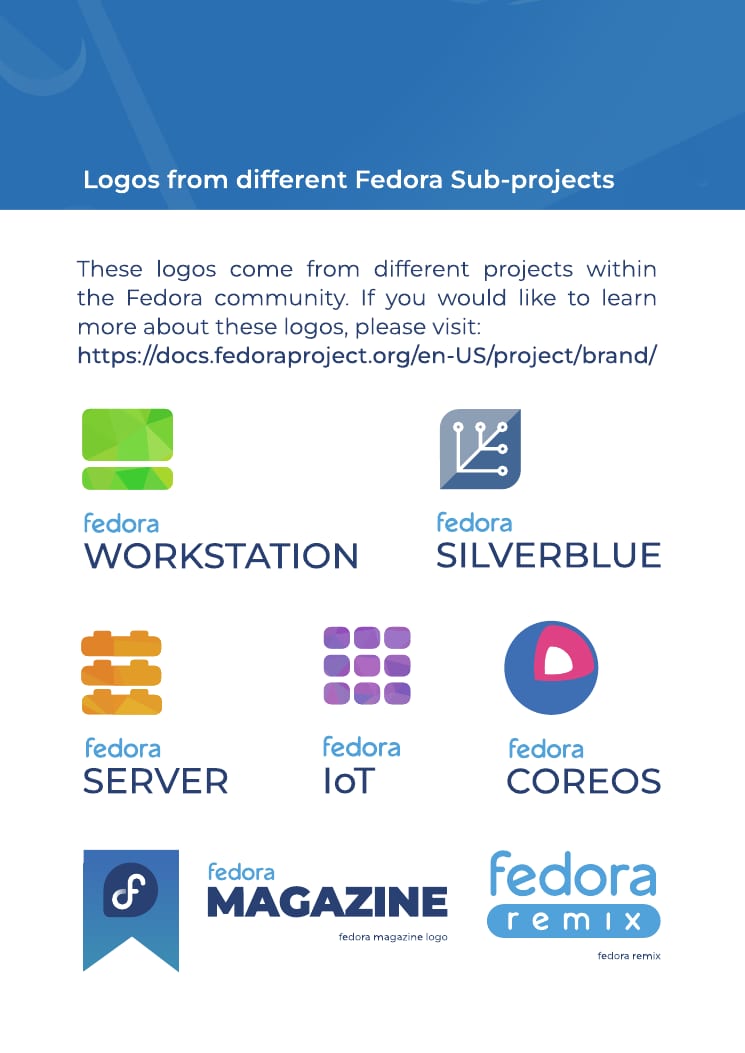
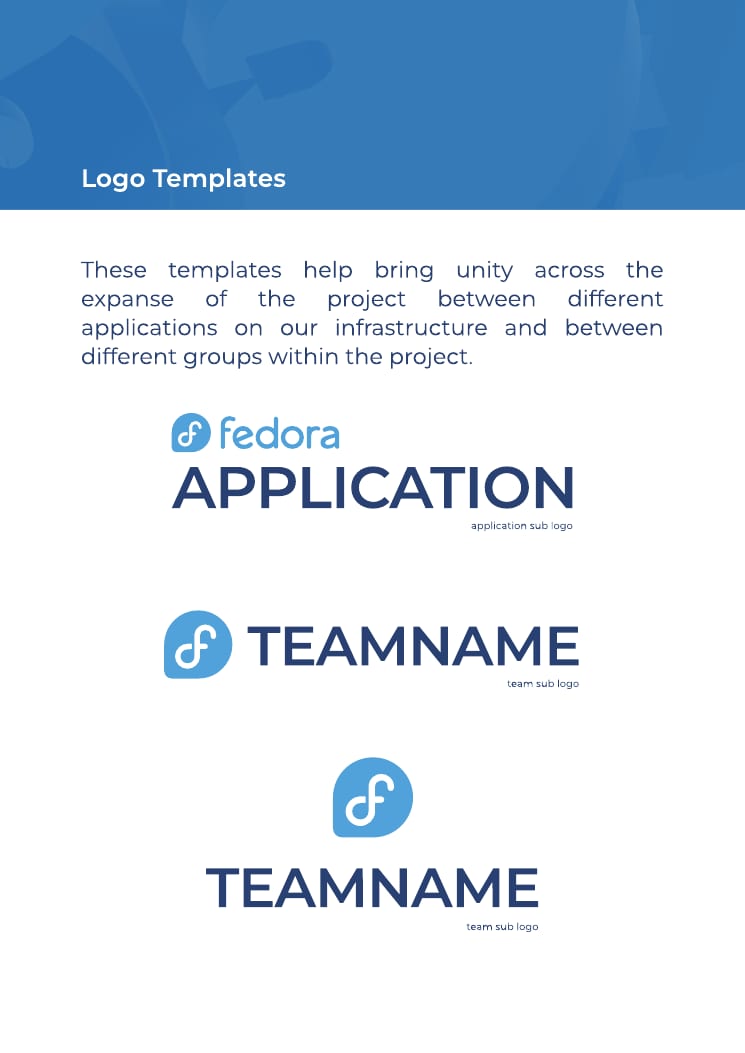
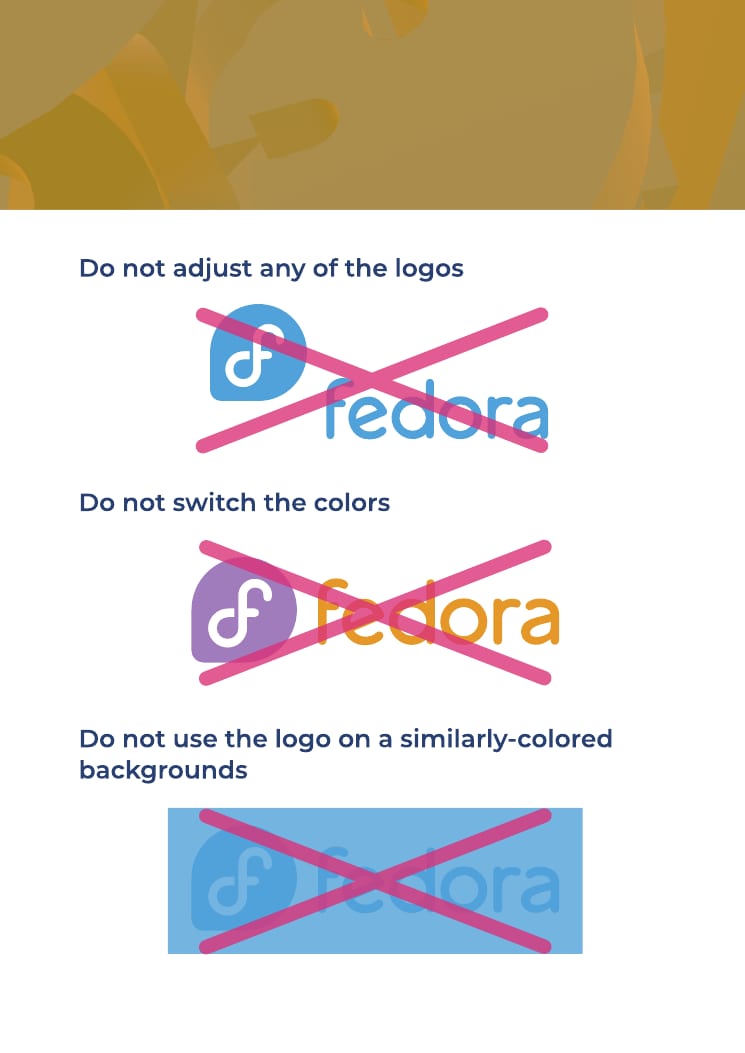
| Default | Horizontal, New Fedora Blue #51A2DA on white |
|---|---|
| Mark | Infinity f knocked out white from the bubble |
| One-color | Black #000000 or white #FFFFFF |
| Dark grounds | Four variants shown on black |
| Clear space | not published |
| Minimum size | not published |
| Files | SVG on fedoraproject.org; PNG on docs; masters on Design GitLab |
One logo family: the Infinity f (a single infinity-stroke lowercase f) knocked out of the bubble, beside or above a rounded lowercase 'fedora' wordmark. Default is horizontal in New Fedora Blue on white. Variants: one-color black and white, vertical, vertical gradient mask, one-color vertical, and four dark-background versions shown on black tiles. Secondary marks: Fedora Remix (nine colorways), edition logos, Magazine logo, and app/team sub-logo templates.
Not published: clear space; minimum size; gradient-mask color stops; logo construction grid.
Source: guide.pdf p.6-13docs.fedoraproject.org/en-US/project/branddocs.fedoraproject.org/en-US/legal/trademarks
It's Your Operating System
It's Your Operating System
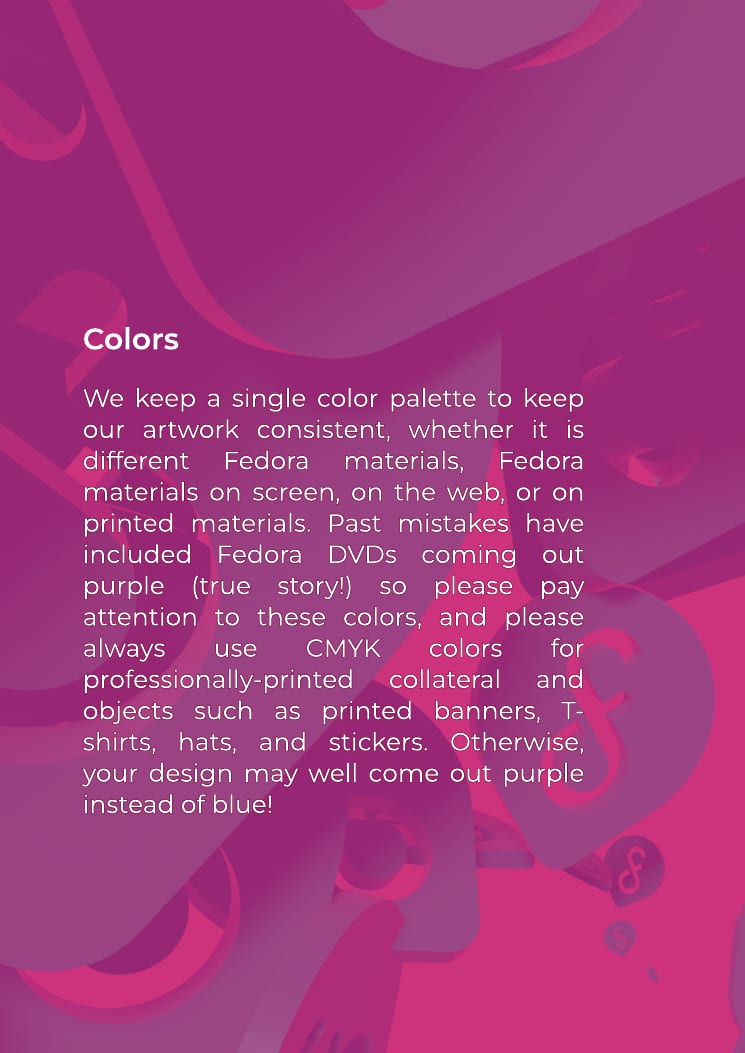
A single palette keeps artwork consistent across screen, web and print; past mistakes include Fedora DVDs printing purple, hence CMYK for print (p.14, paraphrase).
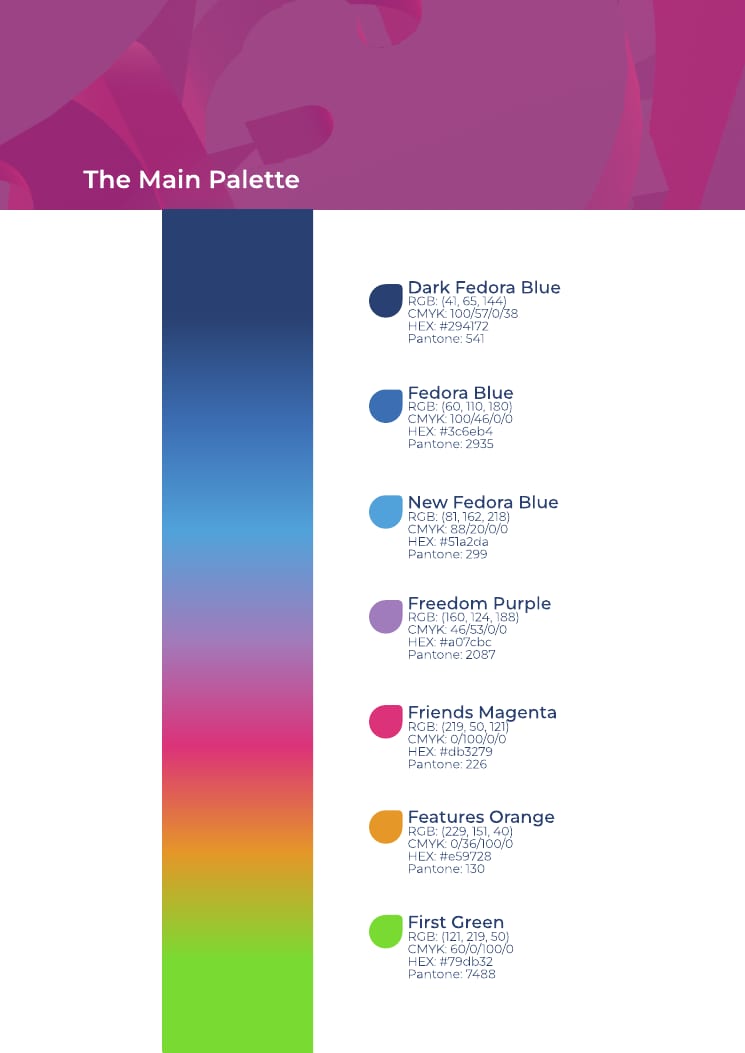
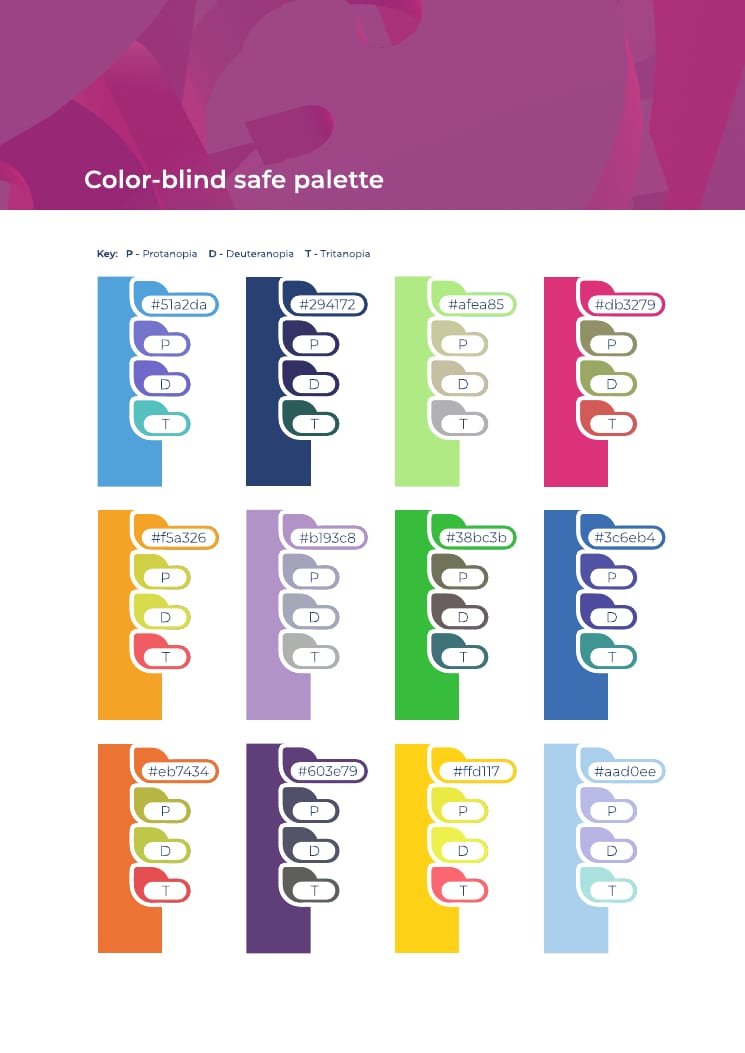
| Dark Fedora Blue | #294172 · RGB 41,65,144 · CMYK 100/57/0/38 · PMS 541 |
|---|---|
| Fedora Blue | #3C6EB4 · RGB 60,110,180 · CMYK 100/46/0/0 · PMS 2935 |
| New Fedora Blue | #51A2DA · RGB 81,162,218 · CMYK 88/20/0/0 · PMS 299 |
| Freedom Purple | #A07CBC · RGB 160,124,188 · CMYK 46/53/0/0 · PMS 2087 |
| Friends Magenta | #DB3279 · RGB 219,50,121 · CMYK 0/100/0/0 · PMS 226 |
| Features Orange | #E59728 · RGB 229,151,40 · CMYK 0/36/100/0 · PMS 130 |
| First Green | #79DB32 · RGB 121,219,50 · CMYK 60/0/100/0 · PMS 7488 |
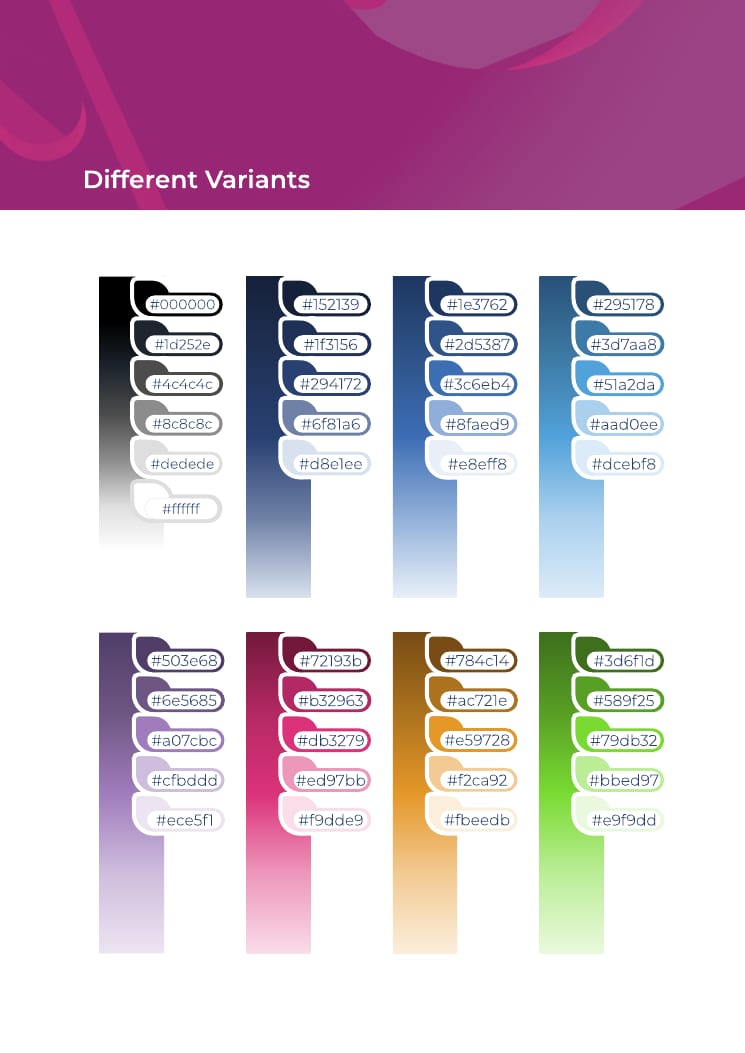
| Ramps | 5 steps per hue, 6 for neutrals (p.16) |
| Color-blind safe | #51A2DA #294172 #AFEA85 #DB3279 #F5A326 #B193C8 #38BC3B #3C6EB4 #EB7434 #603E79 #FFD117 #AAD0EE (p.17) |
| Proportions | not published |
Seven named main colors with RGB, CMYK, hex and Pantone: three blues (Dark Fedora Blue, Fedora Blue, New Fedora Blue) and four Foundation hues (Freedom Purple, Friends Magenta, Features Orange, First Green). Each, plus a neutral ramp from black to white, comes as a five-step ramp (p.16). A separate color-blind safe set of twelve is shown with protanopia, deuteranopia and tritanopia renderings (p.17). In use: blue leads (logo, text, cover), white is the page, and each chapter takes one hue.
Not published: color proportions; contrast pairings or ratios; names for ramp steps; CMYK/Pantone for ramp steps and the color-blind set.
Source: guide.pdf p.14-17docs.fedoraproject.org/en-US/project/brand
It's Your Operating System
Both are openly licensed and freely distributable, which suits a free software project and its volunteers (p.18, paraphrase).
| Their face | Use | License | Open stand-in |
|---|---|---|---|
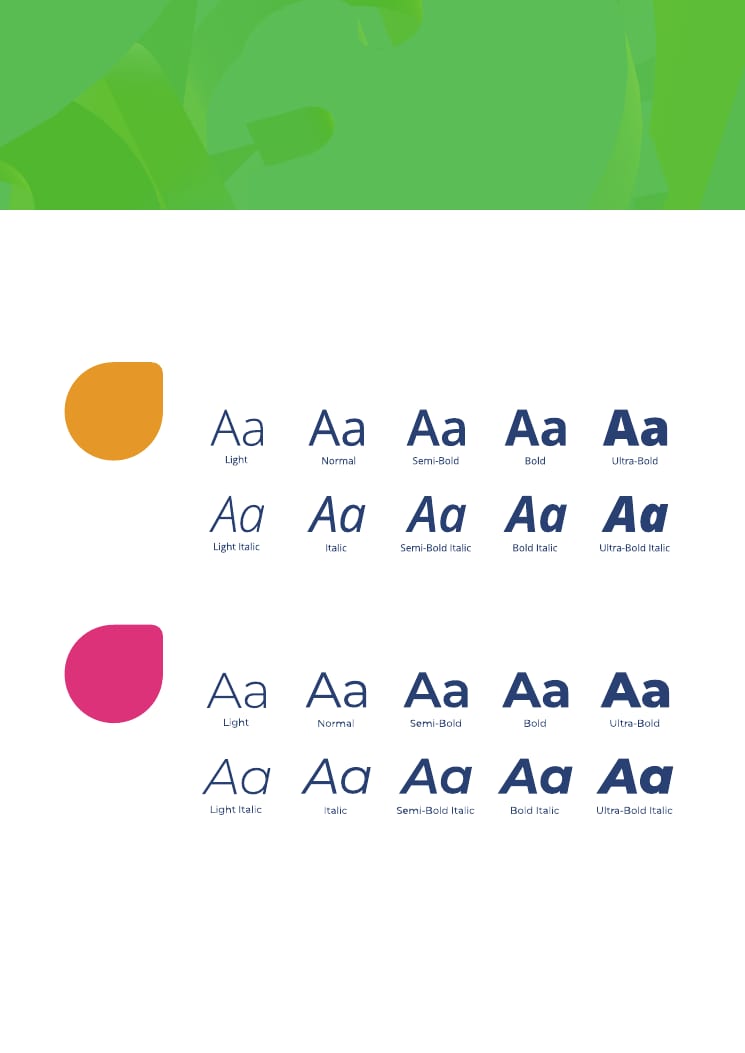
| Montserrat | Titling and headlines; also the Fedora Editions logos and the sub-logo templates (p.8-9, p.18). The booklet sets its chapter titles in Montserrat SemiBold and its running text in Montserrat Light/Regular | Open (SIL OFL 1.1, Google Fonts); the guide: openly licensed and freely distributable | No stand-in: the real face is open. |
| Open Sans | Body text and copy, 'a wide range of weights' (Light to Ultra-Bold with italics, p.19) | Open (SIL OFL 1.1, Google Fonts); the guide: openly licensed and freely distributable | No stand-in: the real face is open. |
| Display | Montserrat, SemiBold 600 (site) · OFL |
|---|---|
| Body | Open Sans, Regular 400 · OFL |
| Weights shown | 300, 400, 600, 700, 800 + italics (p.19) |
| Sizes and leading | not published |
Two open faces: Montserrat for titling and headlines (also the Editions logos), Open Sans for body copy, each shown in Light, Normal, Semi-Bold, Bold and Ultra-Bold with italics. The booklet sets titles in white or Dark Fedora Blue Montserrat SemiBold and running text in Montserrat Light, justified. fedoraproject.org uses Montserrat 600 for the 60px hero and Open Sans 400 for copy (observed).
Not published: type scale; line height; tracking; monospace face.
Source: guide.pdf p.18-19fedoraproject.org/%20(observed%202026-10-30)
Do A circle with one square corner, the logo's own container shape. In the logo the square corner sits bottom left; as badges and chips it is turned so the square corner sits top right. Filled flat with one palette color; white glyph or label inside. One bubble per item; never a second shape language beside it.
The Fedora bubble · Logo container; Four Foundations badges (p.5); palette swatch chips (p.15); color ramp tabs and hex pills (p.16-17); typeface markers (p.19)
Do Each foundation owns a hue: Friends Magenta #DB3279, Features Orange #E59728, First Green #79DB32; the Freedom badge is filled Fedora Blue #3C6EB4 though the palette names Freedom Purple #A07CBC. The booklet tints whole chapters the same way: blue intro and logo (p.1-9), orange do's and don'ts (p.10-13), magenta colors (p.14-17), green typography (p.18-19), violet characters (p.20-25).
Four Foundations color coding · The Four Foundations badges and every chapter of the booklet
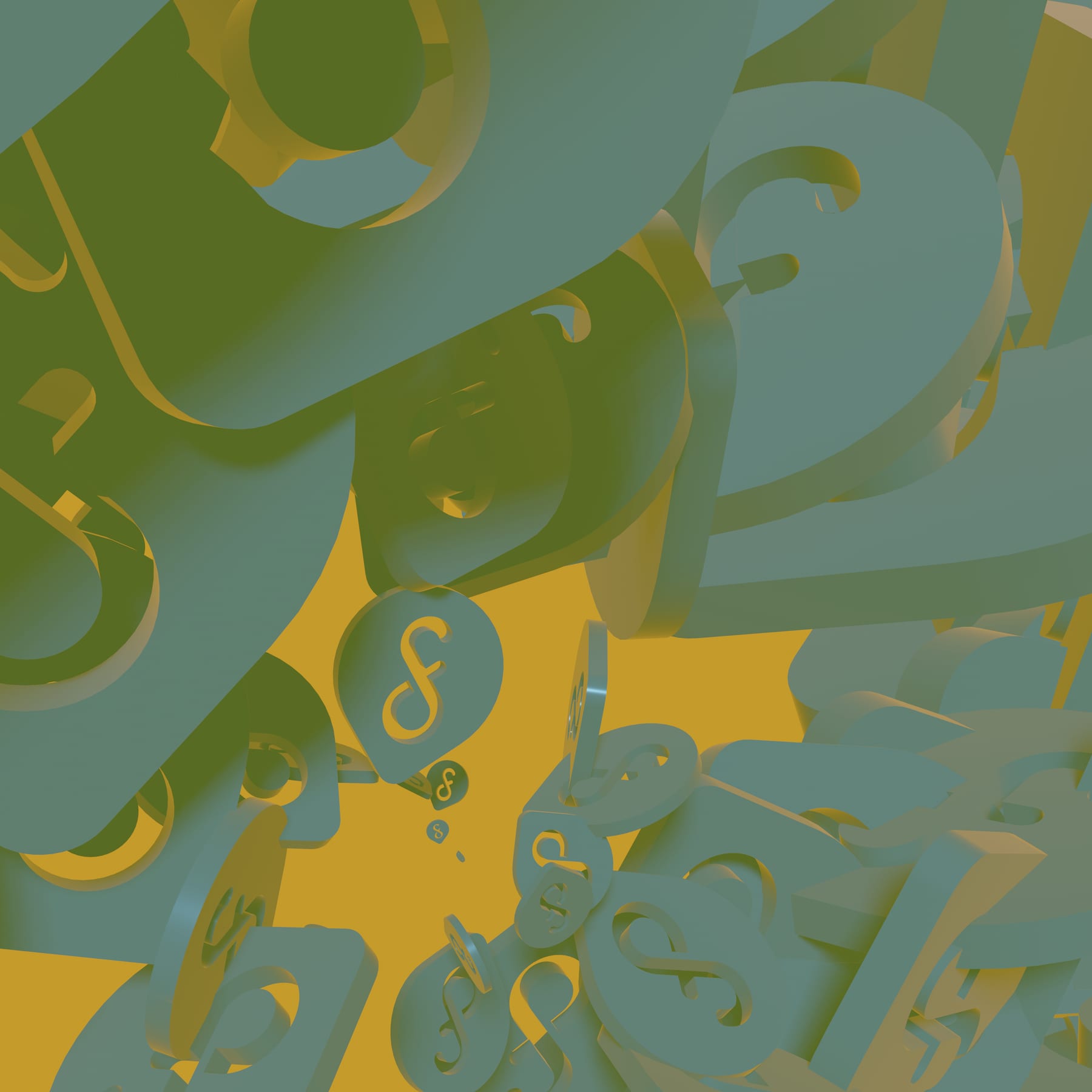
Do A render of floating 3D Fedora bubbles and infinity f's, duotoned in a single palette hue with a lighter wash of the same hue. Openers: full bleed, white Montserrat SemiBold title and light white body left aligned in the middle third. Content pages: the render as a top band about one fifth of the page tall (observed: band ends at 210 of 1053 px), white title bottom-left, then a white page. One hue per render.
Tinted 3D bubble render · Cover, contents, chapter openers and back cover full-bleed (p.1, 3, 4, 6, 10, 14, 18, 20, 26); header band on every content page
Do One continuous vertical gradient running Dark Fedora Blue #294172, Fedora Blue #3C6EB4, New Fedora Blue #51A2DA, Freedom Purple #A07CBC, Friends Magenta #DB3279, Features Orange #E59728, First Green #79DB32. Each ramp on p.16 fades its hue from darkest shade to near white.
Palette spectrum · The Main Palette page (p.15); echoed by the ramps on p.16
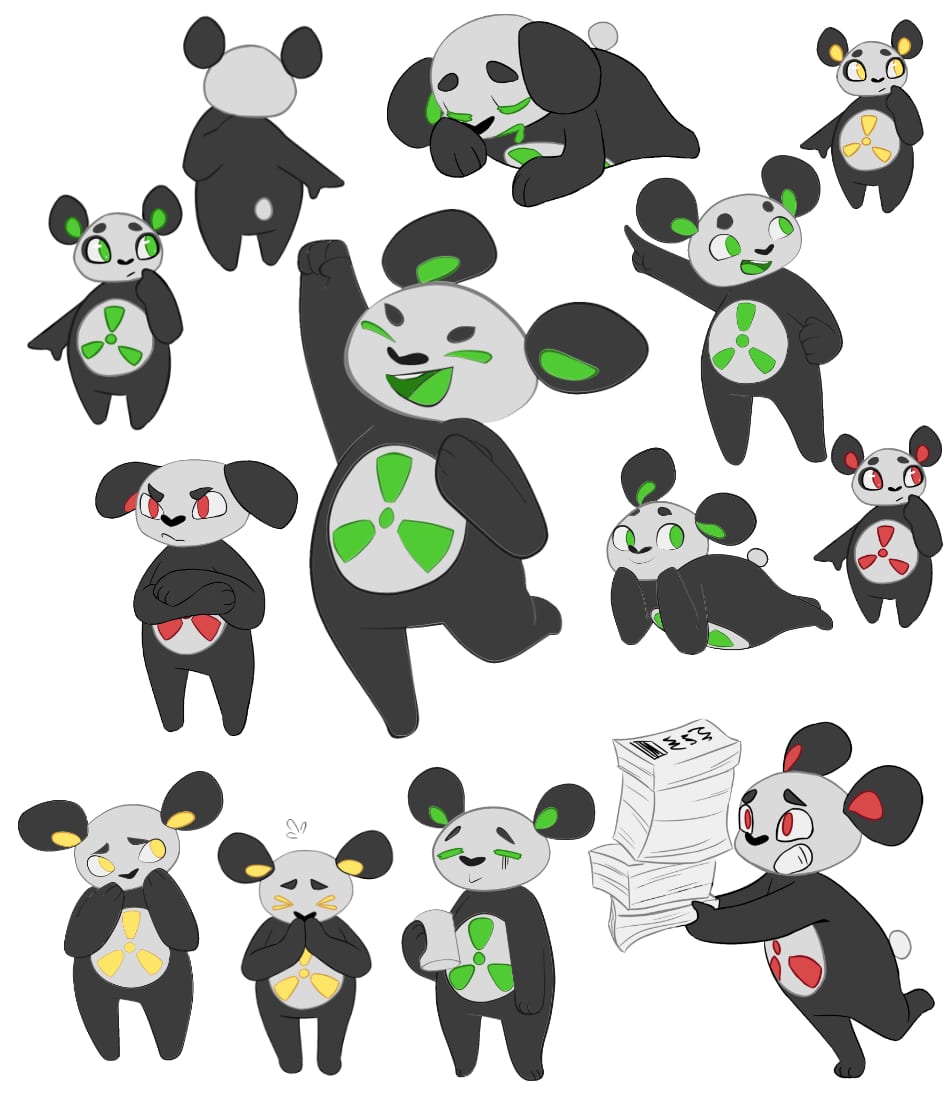
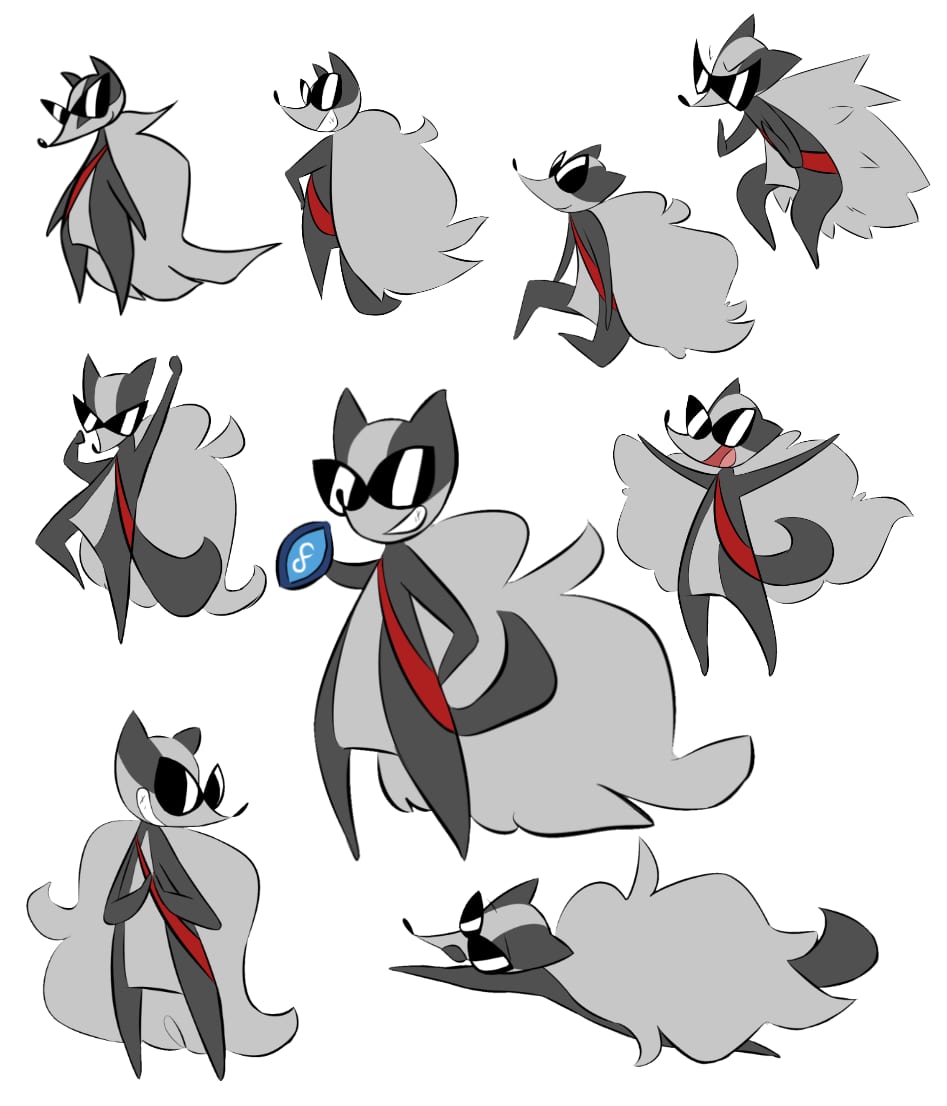
Do Hand-drawn, loose-line cartoon mascots with expressive poses. Panda: grey and black with glowing ears and nuclear-symbol belly (green, yellow or red). Badger: grey with dark mask and red sash, the Fedora Badges mascot. Beefy: hot dog whose mustard shows progress. Colúr: blue pigeon with a Freedom-to-First spectrum belly, the Flock mascot. One character per piece, matched to its context (Badger for badges, Colúr for Flock, Beefy for progress).
Community characters · Panda, Badger, Beefy and Colúr (p.20-24); usable in different projects
Specimens use sample copy, not Fedora’s.
Reusing the logo's own shape and 3D-rendered logos as texture makes every page recognisably Fedora without adding new motifs (our reading).
| Bubble | circle with one square corner |
|---|---|
| Header band | about 20% of page height (observed p.5) |
| Render tint | one palette hue per render |
| Hex label | white pill with a colored outline (p.16-17) |
Three recurring elements: the bubble shape (badges, swatches, tabs, markers), the tinted 3D render of floating logos (full-bleed openers, header bands), and pill-shaped hex labels nested under bubble tabs on the ramp pages. Chapter openers are full-bleed renders; content pages are white with a render band across the top.
Source: guide.pdf p.1-26
One solid, friendly glyph per value reads at badge size (our reading).
| Style | solid white |
|---|---|
| Grid, stroke, sizes | not published |
Only the Four Foundations pictograms: solid white glyphs (open hands for Freedom, two figures for Friends, gears for Features, a trophy for First) in their bubbles, labelled in bold uppercase with a full stop. The website uses Bootstrap Icons and Font Awesome (observed).
Not published: icon grid; stroke; sizes; icon library.
Source: guide.pdf p.5fedoraproject.org/%20(observed%202026-10-30)
Mascots give the community a friendly face and in-jokes people share (Beefy 'became a meme', p.23, paraphrase).
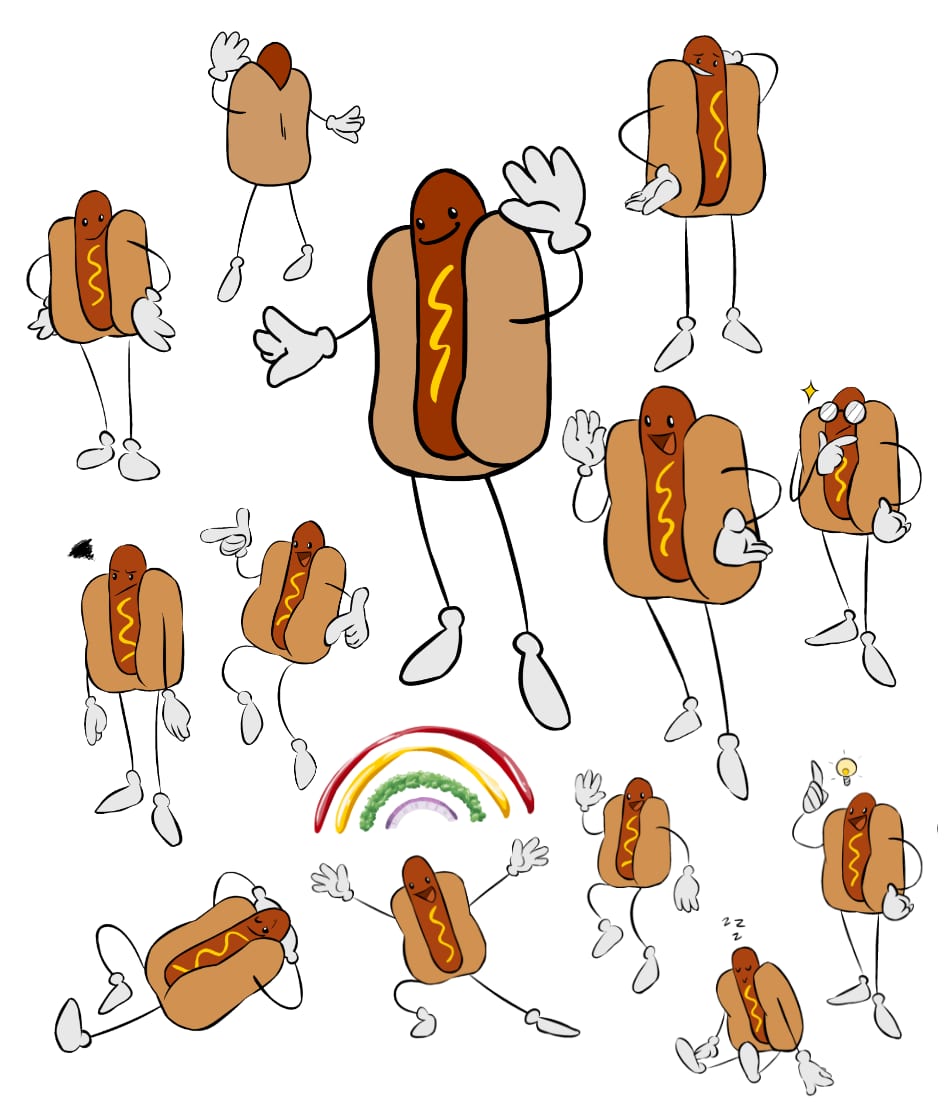
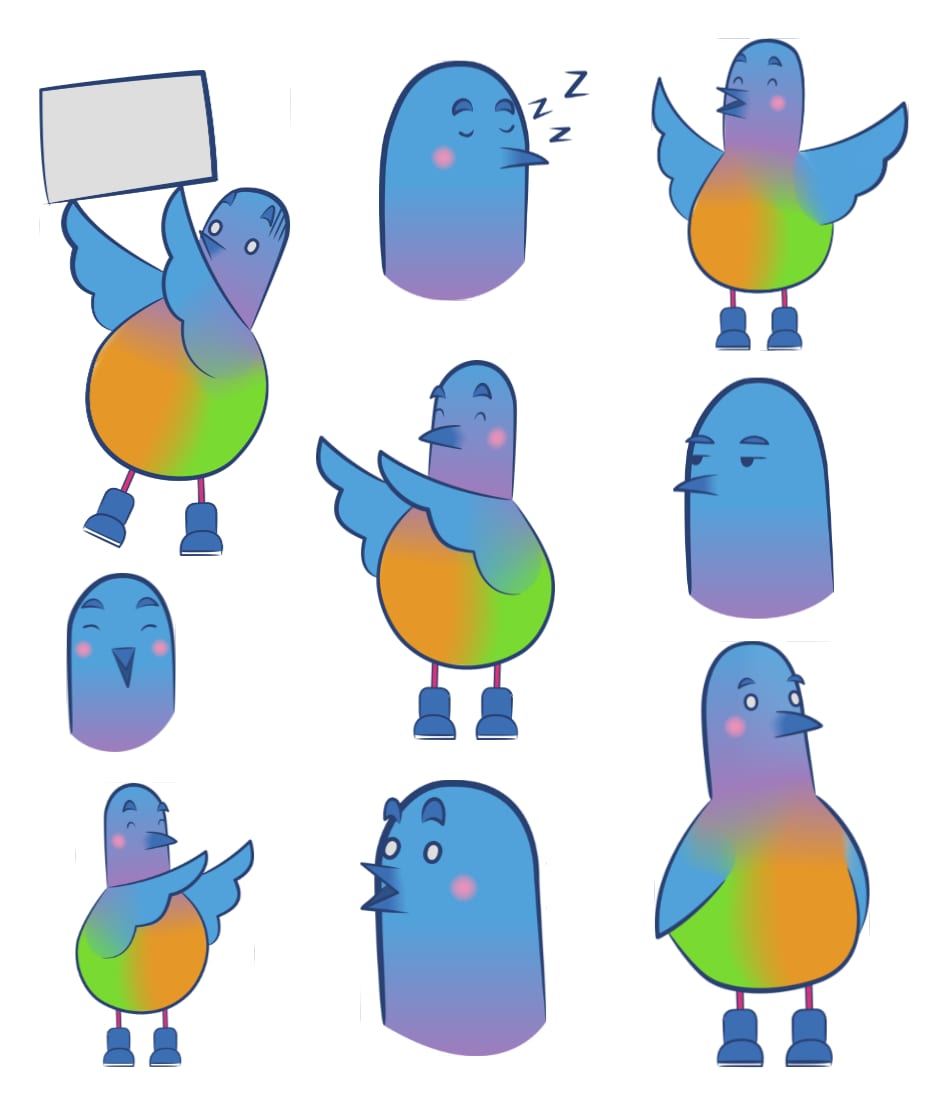
| Characters | Panda, Badger, Beefy, Colúr |
|---|---|
| Style | hand-drawn line, flat color |
The community characters, mostly from the 2021 Fedora Characters Revamp: Panda (general mascot, once the 404/500 helper), Badger (Fedora Badges mascot), Beefy (general mascot, Fedora 17 release name, mustard as progress) and Colúr (Flock mascot, 2022, a pink-necked green pigeon). Loose hand-drawn line, flat fills, many poses.
Source: guide.pdf p.20-24docs.fedoraproject.org/en-US/project/brand
Not published.
| Photography | not published |
|---|
The guide publishes no photography direction and contains no photographs; its imagery is 3D renders and drawings. The homepage uses edition marks and product imagery, no people photography in the fold (observed).
Not published: photography style; subjects; treatment.
Source: guide.pdf p.1-26
The booklet is A4 portrait (observed from page size). Openers: full-bleed tinted render, left-aligned white title and text in the middle of the page. Content pages: a render band across the top fifth with the white title at its lower left, then white with Dark Fedora Blue Montserrat on a wide left margin. Web layout comes from the homepage anatomy step.
Measured from guide.pdf's Read from the 26-page booklet's page renders (text is outlined, so no text layer), with palette pages re-rendered at 200 dpi to read every hex, plus the HTML edition, trademark guidelines and Mission page (fetched 2026-10-30).
| Measure | Desktop | Phone |
|---|---|---|
| Page margin | 80px | 16px |
| Section padding | 48px | 48px |
| Hero text width | max 853px, centered | full width |
| Navigation | 54px | 54px |
Hero H1
Open Sans · 60px (phone 36) · line 1 · weight 600
Hero lead
Open Sans · 30px (phone 16) · line 1.2 · weight 400
Section H2
Open Sans · 36px (phone 30) · line 1.111 · weight 600
Edition card title
Open Sans · 30px (phone 20) · line 1.2 · weight 700
Block and support H3
Open Sans · 30px (phone 24) · line 1.2 · weight 600
Hero side labels (EVENTS:)
Open Sans · 24px (phone 16) · line 1.333 · weight 600
DPG statement
Open Sans · 20px · line 1.4 · weight 400
CHANNELS: label / footer heads
Open Sans · 24px · line 1.333 · weight 600
Body
Open Sans · 18px (phone 16) · line 1.556 · weight 400
Tagline
Open Sans · 18px (phone 16) · line 1.556 · weight 400
Release number
Open Sans · 60px (phone 48) · line 1 · weight 700
Release label
Open Sans · 14px (phone 12) · line 1.429 · weight 400
Nav link
Open Sans · 14px · line 1.429 · weight 400
Button
Open Sans · 18px (phone 16) · line 1.556 · weight 500
Text link (Download Now)
Open Sans · 16px · line 1.5 · weight 400
How Fedora’s own landing pages are built, observed on fedoraproject.org, 2026-10-31. The full measurements are in spec.md.
Source: guide.pdf p.1-26
How our engine applies Fedora's system to each format. This is our recipe built from their rules, not something Fedora publishes. Level = how much Foundation color and render texture the format carries (0 plain blue-and-white, 5 full tinted render, multiple hues and a mascot).
| Format | What they did | Source |
|---|---|---|
| software and web | The logo is used across software applications and web sites; app and team logos follow the Design team's templates. | docs.fedoraproject.org/en-US/project/brand |
| print and merchandise | T-shirts, booth tablecloths, banners and stickers, printed in CMYK so the blue doesn't come out purple. | docs.fedoraproject.org/en-US/project/brand |
| derived work | The Fedora Remix mark labels content derived from Fedora, in nine published color variants. | docs.fedoraproject.org/en-US/project/brand |
| Format | Loudness | Must appear | What varies |
|---|---|---|---|
| Landing page | Build it the way fedoraproject.org is built (kit.spec.page from the anatomy step): blue gradient hero with the white horizontal logo top left, Montserrat 600 Title Case hero headline in white, Open Sans lead, New Fedora Blue / Fedora Blue / Dark Fedora Blue as the working colors, white or light sections below, the Red Hat sponsor bar at the foot of the footer (no trademark line on the homepage, observed 2026-10-31) | Which editions or sections appear; a Foundation hue as a section accent; a mascot in a supporting role | |
| Slide deck | Section openers as a full-bleed render tinted in one Foundation hue with white Montserrat title; content slides white with Dark Fedora Blue type; horizontal logo, untouched | Which Foundation hue per section; bubbles as bullets or stat badges | |
| Social post | One Foundation hue or brand blue as ground, white Montserrat headline, logo from official files, palette only | Mascot, render texture, which hue | |
| Print and merchandise | CMYK or Pantone values only (p.14-15); official logo; Council permission for merchandise | Ground color and mascot | |
| Event booth banner | Large horizontal logo on white or a dark-background variant on Dark Fedora Blue; CMYK print; Colúr for Flock events | Foundation hue band, render texture | |
| Docs or Magazine article | Magazine writing rules: sentence case, US English, active voice; featured images from the provided assets and fonts only | Featured image hue | |
| Team or app logo | Published sub-logo template: logo or bubble with the name in uppercase Montserrat, Dark Fedora Blue; requested through the Design team | Horizontal or vertical template |
Source: guide.pdf p.2, p.10-13, p.26docs.fedoraproject.org/en-US/legal/trademarks
Your name and logo, Fedora’s system.
Use this kit for my brand Use this brand in Claude
Get your brand audit Put your brand in Claude What goes in a brand book
Each value is marked published, observed, our reading or our recipe, with its source. Checked 2026-10-31. Not affiliated with Fedora.