
The lesson
When the customer can't be named, describe them precisely by industry, origin and market, then break the challenge into numbered problems that the solution answers one by one.
The move
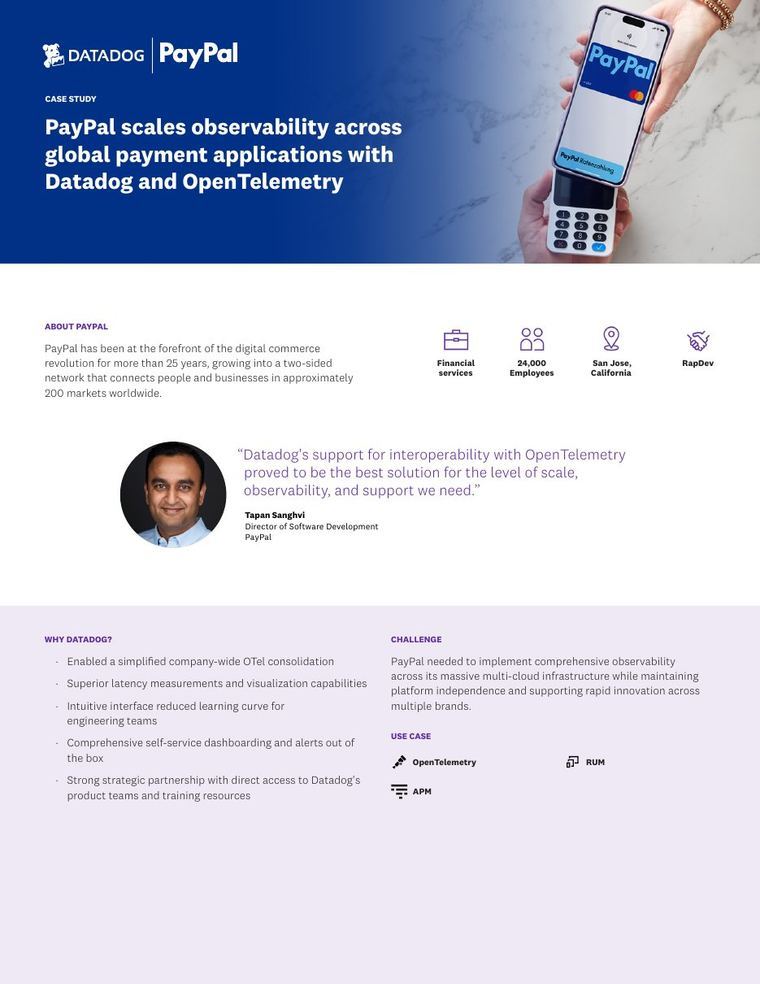
A "CUSTOMER STORY" label and headline sit beside a photo of a card payment, followed by stat tiles for "40%" reduction in batch cycle time, "~50%" licensing optimization for non-production workloads and "99.99%" platform availability. A sidebar lists headquarters, database engine, cloud and use cases next to an "About" section explaining the spin-off and the India market, then a pull quote from the Head of IT. "Challenges" opens with "A company becoming independent - with no margin for disruption" and five numbered problems, and "The Solution" answers with a diagram and six bolded capability paragraphs. "Outcome" repeats the stat tiles with bullets, and "Looking ahead" closes the story.
Why it works
- Our readThe About section gives the spin-off and India context, so an unnamed customer still reads as a specific company with specific stakes.
- Our readFive numbered challenges covering migration, governance, performance, resilience and licensing let a technical buyer find the problem that matches their own.
- Our readBolded labels in the solution, such as governance, resilience and license optimization, line up with the numbered challenges, so the reader can check each problem was addressed.
What not to copy
Don't copy Tessell's Oracle, Azure and AWS RDS specifics, the spin-off backstory or the India meal benefits context. Keep the order: stat tiles up top, a facts sidebar, customer context, a leader quote, numbered challenges, labeled solution paragraphs, repeated outcomes and a forward-looking close.
More from Tessell


More case studies


Steal it for your brand.
Tell us what you want to make. We’ll talk through how to put these ideas to work for your brand.