The lesson
Anchor the case study in a real operating constraint, then show the product working for both the end user and the internal team.
The move
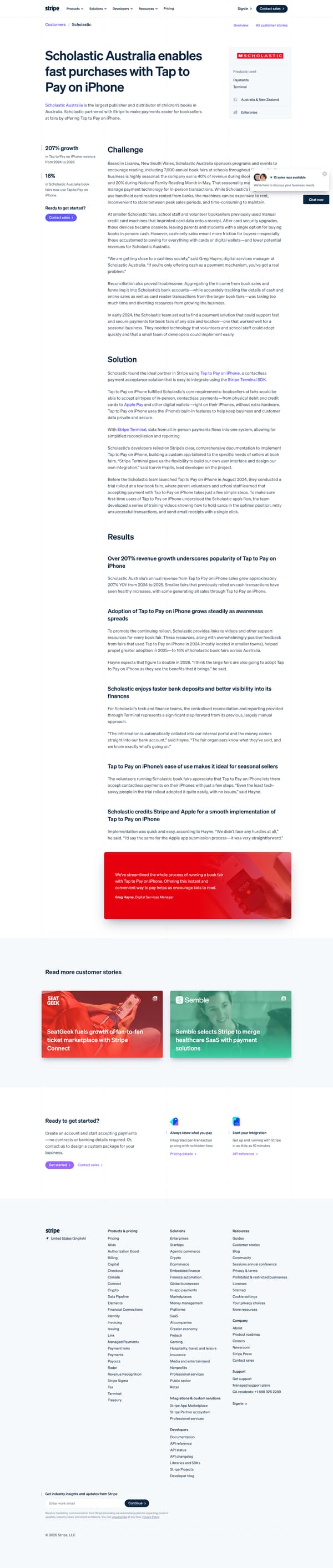
The story opens with the title “Scholastic Australia enables fast purchases with Tap to Pay on iPhone,” a short summary of the customer, a logo panel, product tags for Payments and Terminal, and two result callouts. “Challenge” explains how a seasonal book fair business had to manage rented card readers, obsolete manual machines, cash-only sales, and reconciliation work. “Solution” introduces Tap to Pay on iPhone through Stripe Terminal, then shows how Scholastic built a custom app, ran a trial rollout, and made training videos for first-time users. “Results” starts with the heading “Over 207% revenue growth underscores popularity of Tap to Pay on iPhone,” then continues into adoption as support resources help the rollout spread.
Why it works
- Our readThe opening puts the customer, the use case, the products used, the region, and two outcome figures in view before the narrative starts.
- Our readThe challenge section makes seasonality concrete with book fairs, peak months, rented card readers, obsolete manual machines, and cash-only friction.
- Our readThe solution section explains both the buyer experience and the implementation work, so the product feels practical for volunteers, school staff, and developers.
What not to copy
Don't copy Scholastic Australia's school book fair seasonality, Book Week, National Family Reading Month, or Tap to Pay on iPhone rollout details. Keep the structure of a specific operational constraint, a product fit that removes hardware, implementation proof, user training, and customer-owned results.
More from Stripe


More case studies








Steal it for your brand.
Tell us what you want to make. We’ll talk through how to put these ideas to work for your brand.