
The lesson
State the friction in the buyer's current tool, then make your product principle concrete with definitions, controls, and a rollout workflow.
The move
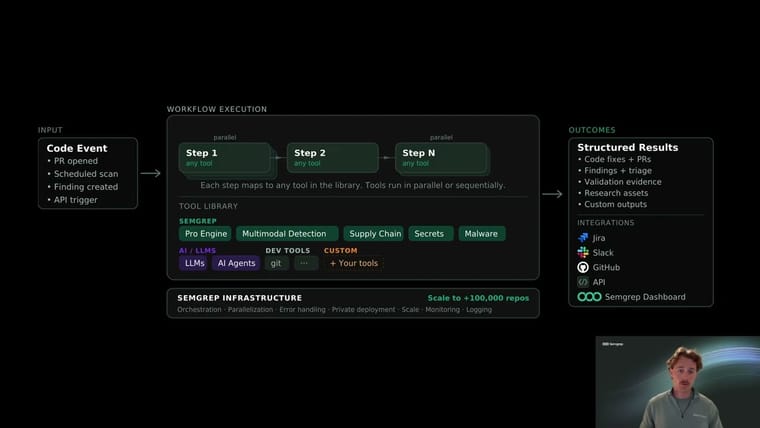
The piece opens with the claim that most modern SAST tools only provide findings, creating false positives and an all-or-nothing approach to shifting left. After a short 'Helpful Definitions' section defining rule, finding, ruleset, and fix-rate terms, it argues for 'Customizing policies' through Monitor, Comment, and Block behaviors. It then moves to 'Customizing rules,' showing how rule customization can account for an internal safeguard and reduce noise before ending on 'Fixing the right issues' and 'Conclusion.'
Why it works
- Our readThe opening makes the disagreement clear: fast SAST is not enough if teams cannot control what developers see.
- Our readDefinitions reduce ambiguity before the argument depends on terms like rules, findings, and fix rate.
- Our readThe Monitor, Comment, and Block workflow turns the abstract claim about customizability into a rollout model an AppSec team can picture.
What not to copy
Don't copy Semgrep's SAST terms or its Monitor, Comment, and Block labels. Keep the structure of naming the buyer's trust problem, defining the working vocabulary, and then showing the control model that resolves it.
More from Semgrep

More executive briefs


Steal it for your brand.
Tell us what you want to make. We’ll talk through how to put these ideas to work for your brand.