The lesson
Build the datasheet as a seller-ready talk track, not just a feature list.
The move
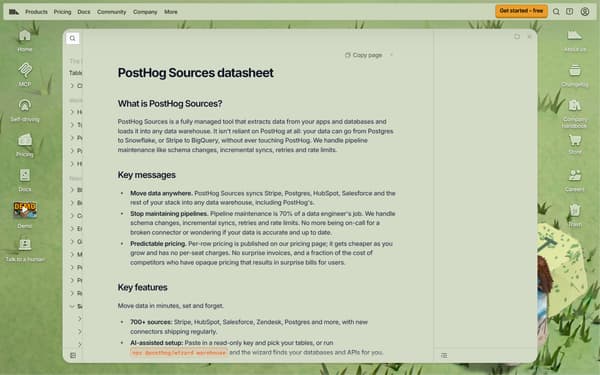
The datasheet opens with “What is PostHog Sources?” and explains that Sources extracts data from apps and databases and loads it into any data warehouse. “Key messages” turns the pitch into three bullets: “Move data anywhere,” “Stop maintaining pipelines,” and “Predictable pricing.” “Key features” lists setup, connectors, historical syncs, the sync engine and security, then “Sources, or ELT?” explains the category language. The lower half moves into “Common use cases,” “Buying signals,” and a “PostHog vs Fivetran vs Airbyte” table with pricing, free tier, pricing unit, minimum spend, backfills and product-fit differences.
Why it works
- Our readThe opening definition tells a seller what Sources is and what it is not, including that data can move without touching PostHog.
- Our readThe key messages turn product details into short talk tracks a seller can repeat, such as moving data anywhere and stopping pipeline maintenance.
- Our readThe use-case and buying-signal sections help the reader match the product to a customer situation before talking about competitors.
What not to copy
Don't copy the PostHog-specific category debate unless your product also has a naming gap between what buyers search for and what you call it. Keep the structure of definition, key messages, features, category explanation, use cases, buying signals and competitor table.
More from PostHog




More one-pagers



Steal it for your brand.
Tell us what you want to make. We’ll talk through how to put these ideas to work for your brand.