The lesson
Teach the workflow first, then place the product inside each practical step so the guide reads like a usable checklist.
The move
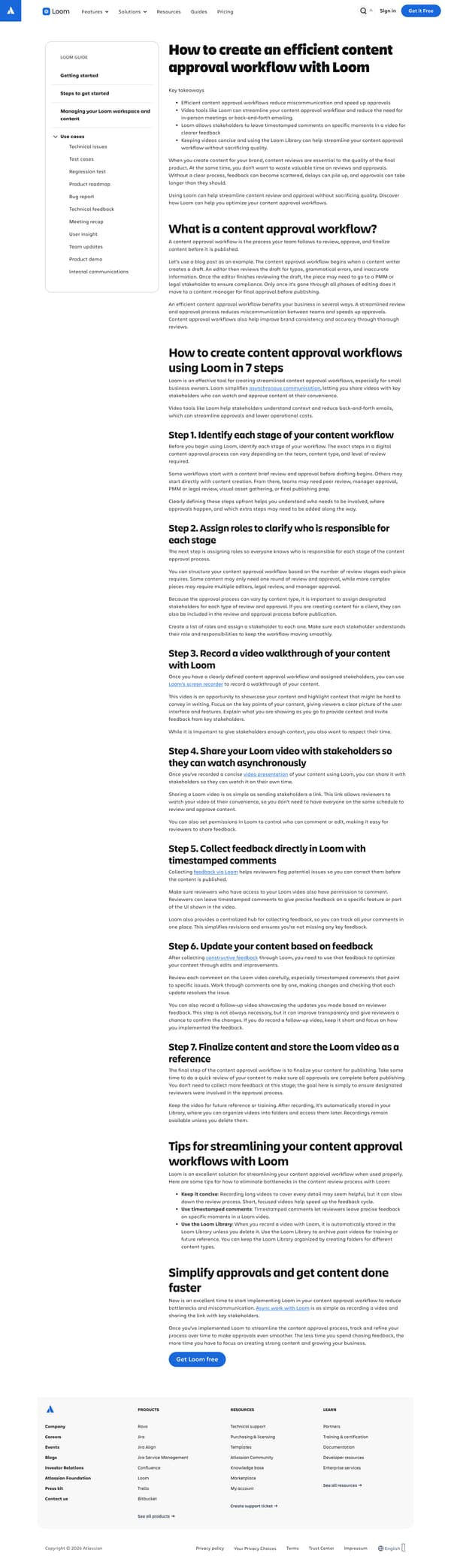
The guide opens inside the Loom resources section with a left navigation of related use cases and the title "How to create an efficient content approval workflow with Loom." A short "Key takeaways" list says efficient workflows reduce miscommunication, video tools can reduce meetings and emailing, and Loom comments can be timestamped. The body defines "What is a content approval workflow?" with a blog post example, then moves into "How to create content approval workflows using Loom in 7 steps." The steps walk from identifying each stage and assigning roles to recording a Loom walkthrough, sharing it with stakeholders, collecting feedback in timestamped comments, updating the content, and finalizing the workflow.
Why it works
- Our readThe opening key takeaways tell a reader the main benefit before the longer workflow begins.
- Our readThe definition section gives the process a shared meaning, so the steps that follow have clear context.
- Our readEach step is written as an action, from identifying stages to collecting timestamped comments, which makes the guide easy to turn into a checklist.
What not to copy
Don't copy Loom's product-specific approval flow or its examples around screen recording and timestamped comments. Keep the structure of takeaway bullets, a plain definition, then action-led steps that show where the product fits into the process.
More from Atlassian







More content marketing





Steal it for your brand.
Tell us what you want to make. We’ll talk through how to put these ideas to work for your brand.