
The lesson
For a technical buyer, back the headline result with the actual method, including the math and a worked example, so engineers can check how the number was reached.
The move
The title 'Training and Serving the Claygent Model Router' sits over a one-line summary of the 47% cost cut, a co-branded Applied Compute and Clay banner, and three stat tiles: '47% cost reduction', 'Hundreds of millions of queries' and '100s of ms per request'. A sidebar holds a table of contents and an 'About the company' card naming the industry and the champion, Jeff Barg. The story moves through 'Introduction', 'Claygent Background' and 'Benefits of Claygent Auto-mode Routing', with quotes from Clay's Head of AI and Head of Data between sections. It then goes deep in 'Training a Specialized Query Router' with the utility formula, a 'Synthetic Example Query' using a fictional company, 'Offline Evaluation', 'Model Serving Optimizations', 'Production Performance' and a 'Conclusion'.
Why it works
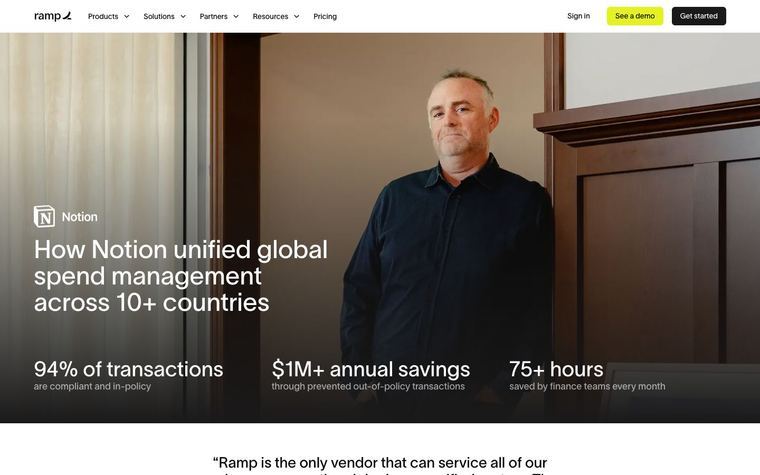
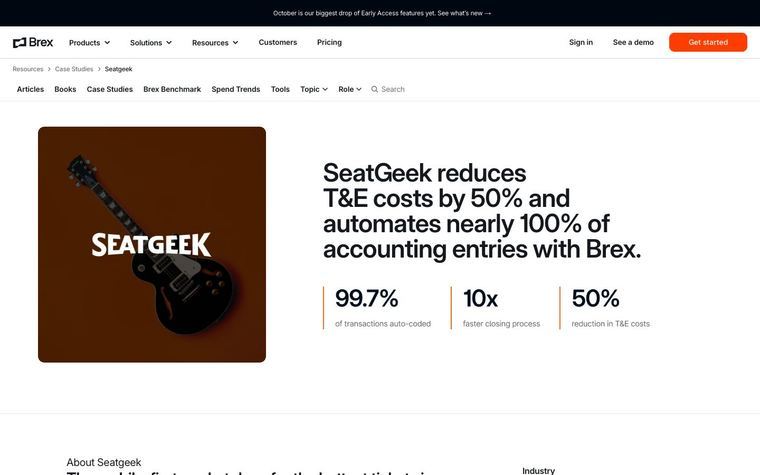
- Our readThe three stat tiles give the outcome, the scale and the latency before any technical detail, so a reader who stops early still has the result.
- Our readSample queries for company classification, contact lookup and deep company research show the range of task difficulty, which is why routing matters at all.
- Our readShowing the training setup, the cost-penalty formula and an evaluation section lets an ML reader judge the method, not just trust the claim.
What not to copy
Don't copy Clay's Claygent auto-mode details, the GRPO training setup, the utility formula or the ACME Corp example. Keep the order of stat tiles, customer card, short context, customer quotes, then a method section with a worked example and an evaluation before production results.
More from Applied Compute


More case studies
Steal it for your brand.
Tell us what you want to make. We’ll talk through how to put these ideas to work for your brand.