The lesson
Lead with the founder’s decision, then introduce each product feature as the answer to the next launch problem.
The move
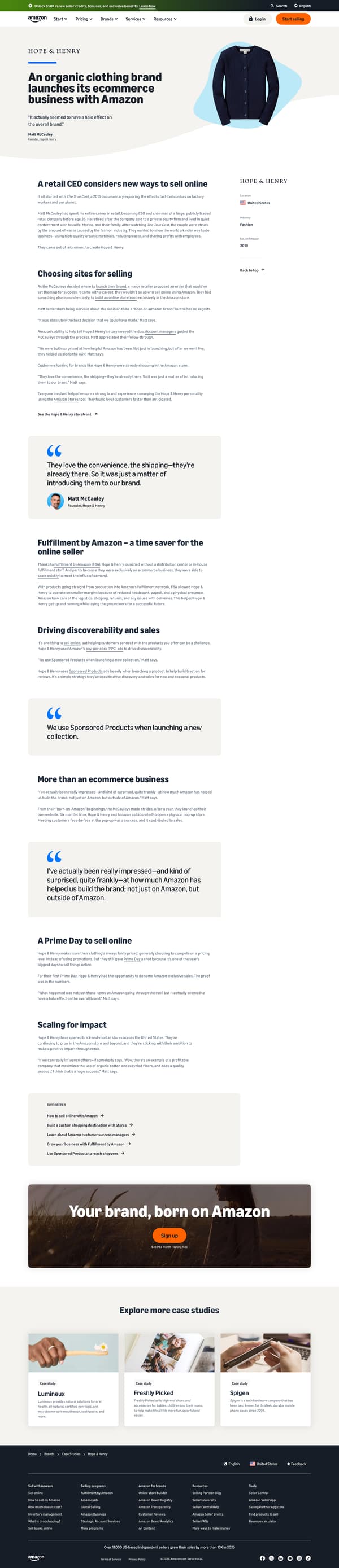
The page opens with the Hope & Henry name, a product photo, the title “An organic clothing brand launches its ecommerce business with Amazon,” and Matt McCauley’s quote: “It actually seemed to have a halo effect on the overall brand.” The story then explains why Matt and Marina McCauley created Hope & Henry after watching The True Cost, and why they chose to become a “born-on-Amazon brand” instead of taking a major retailer order. The middle sections move through “Choosing sites for selling,” “Fulfillment by Amazon – a time saver for the online seller,” and “Driving discoverability and sales,” using quotes from Matt to connect Amazon Stores, FBA and Sponsored Products to the company’s launch. Later copy frames Amazon as more than a sales channel, with the brand-building effect carried by the founder’s own words.
Why it works
- Our readThe founder quote appears in the hero before the narrative, so the reader immediately sees the brand impact Amazon wants to prove.
- Our readThe origin story starts outside Amazon, with The True Cost and the founders' values, which makes the selling decision feel like part of a company story rather than a feature list.
- Our readEach Amazon capability enters through a business moment: choosing a channel, building a storefront, handling fulfillment, and launching new collections.
What not to copy
Don't copy Hope & Henry's organic clothing mission, The True Cost origin, or the born-on-Amazon phrase unless they belong to the customer. Keep the structure of a founder origin, a hard channel choice, then product capabilities introduced only when they solve the next operational problem.
More from Amazon
More case studies








Steal it for your brand.
Tell us what you want to make. We’ll talk through how to put these ideas to work for your brand.