
The lesson
Build a comparison page around the messy real-world situations that make the competitor's default product fall short.
The move
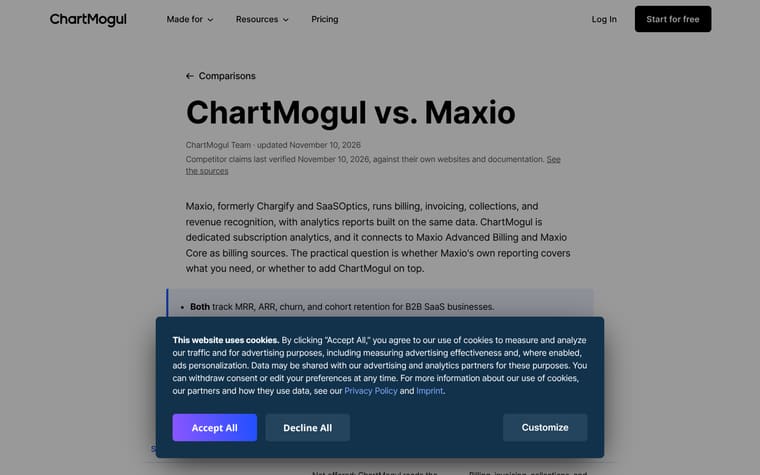
The page opens with "ChartMogul vs. Stripe (built-in billing analytics)" and a verification note, then summarizes what Stripe Billing includes and what ChartMogul adds. A direct paragraph says both report MRR, churn, LTV, and subscriber metrics from Stripe data, then names the cases where ChartMogul is the better fit and the cases where Stripe is enough. The main table, "ChartMogul vs. Stripe (billing analytics), situation by situation", compares rows like billing outside Stripe, past-due churn timing, historical errors, duplicate customers, trial conversion, workflows, warehouse sync, custom SQL, and AI questions. Below, "How do ChartMogul and Stripe handle messy billing data?" expands the argument across customers billed outside Stripe, data settings, data editing, historical data, and duplicate customers.
Why it works
- Our readThe opening gives Stripe credit for the analytics it includes before naming the extra control ChartMogul adds, which makes the comparison feel bounded rather than dismissive.
- Our readThe situation-by-situation table turns the choice into concrete reporting problems, such as past-due customers, duplicate records, trial cohorts, and warehouse sync.
- Our readThe messy-data section explains why billing records and reporting records differ, so the reader can understand the cause of the comparison instead of only seeing feature claims.
What not to copy
Don't copy the dense table unless buyers already know the operational edge cases in your category. Keep the structure of crediting the competitor first, then comparing specific situations where the difference appears.
More from ChartMogul





More landing pages







Steal it for your brand.
Tell us what you want to make. We’ll talk through how to put these ideas to work for your brand.