Pitch deck examples by stage
-
Uber pitch deck (2008)
Push a button, get a car. In 2008.
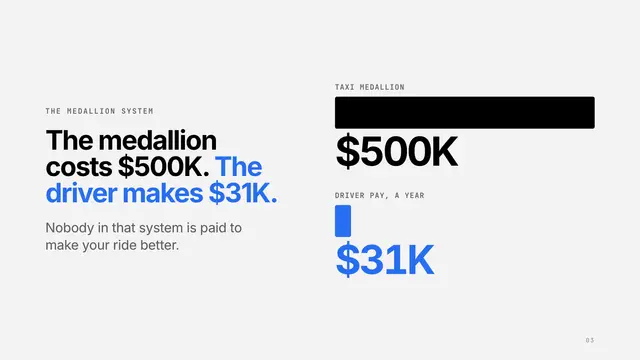
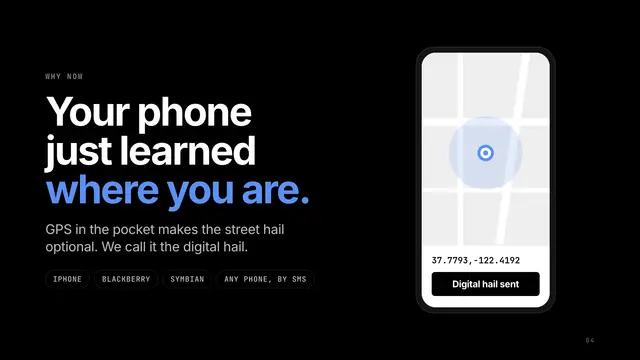
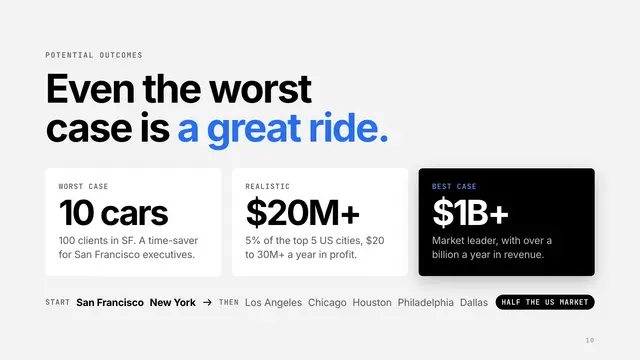
What to steal. With no product and no customers, UberCab sold a broken system and a timing shift: medallions cost $500K while drivers make $31K, and phones just learned where you are. Then it showed the worst case was still a good business.
- 25 slides
- Garrett Camp
-
Airbnb pitch deck (2009)
Air mattresses to $2.1B of math.
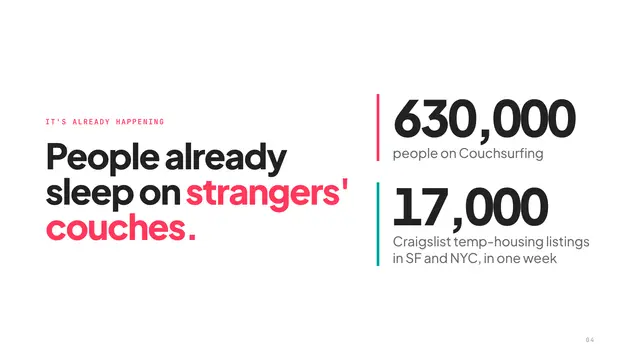
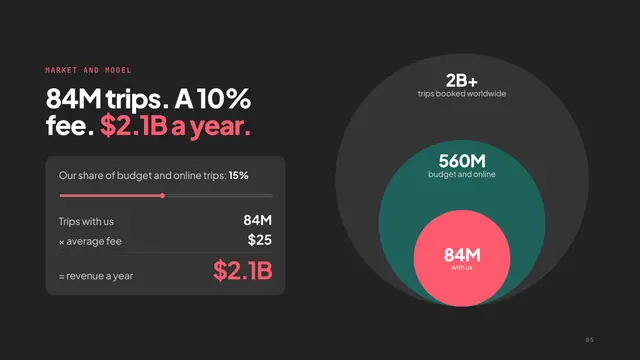
What to steal. The most copied seed deck there is, because every slide does one job. A one-line promise, a problem you can price, proof people already behave this way (Couchsurfing), and market math built from trips, share and a 10% fee.
- $600K seed
- 14 slides
- Sequoia
-
Snapchat pitch deck (2013)
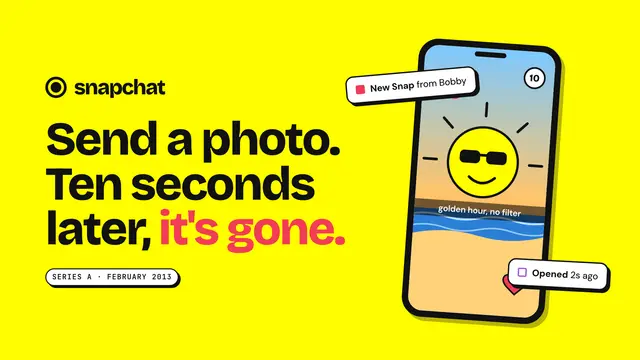
Ten seconds, then gone. Facebook wanted it anyway.
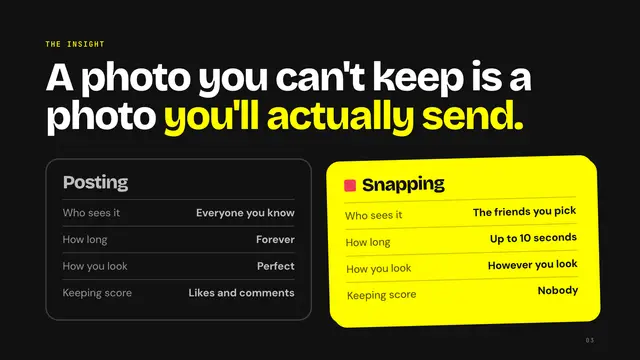
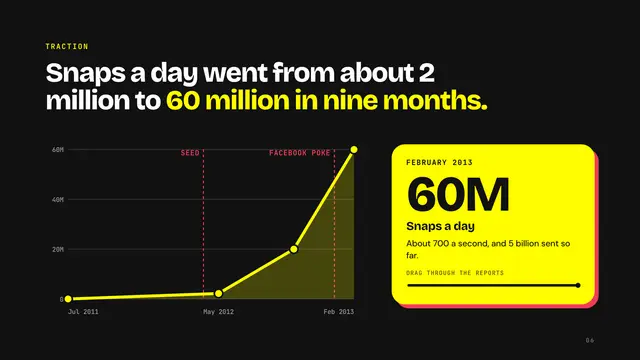
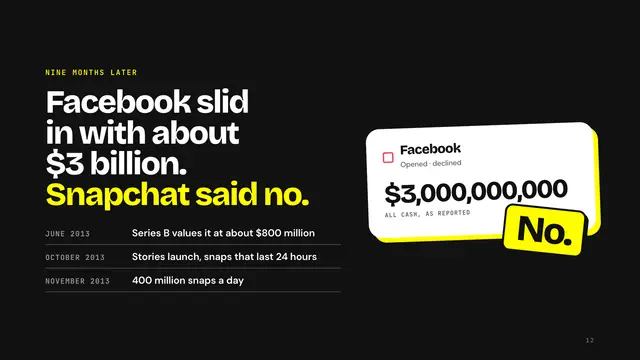
What to steal. Everyone called it a sexting app. The deck answers with the insight (a photo you can't keep is one you'll actually send), then growth that proves teenagers got it: about 2 million snaps a day to 60 million in nine months. It ends on the $3 billion Facebook offer Snapchat turned down.
- $13.5M Series A
- 60M snaps a day
- Said no to $3B
-
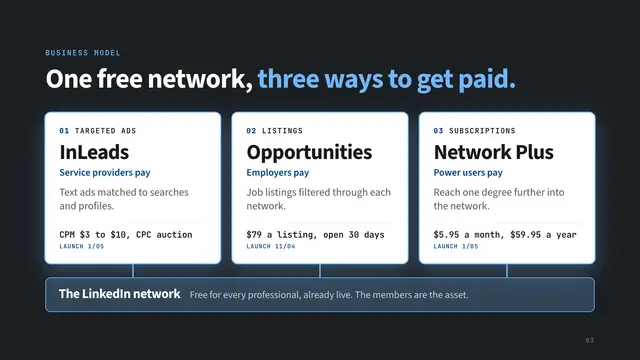
LinkedIn pitch deck (2004)
Promised. Delivered. Repeat.
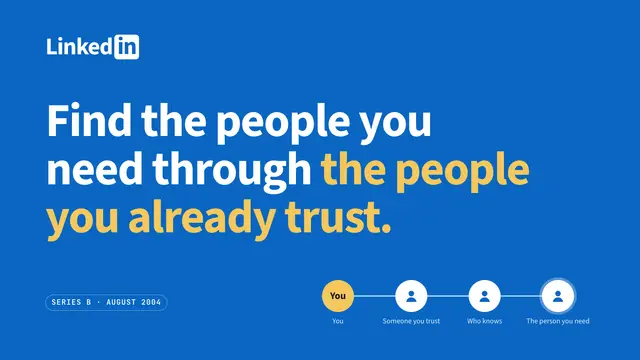
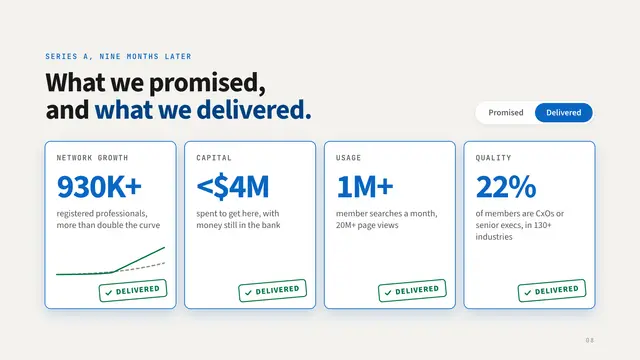
What to steal. Reid Hoffman answered the scariest question, no revenue yet, before showing the product. Then a slide that holds last round's promises next to what was delivered, which is the whole case for the next round.
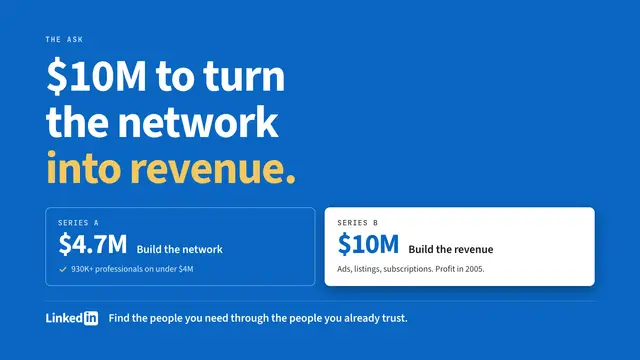
- $10M Series B
- 38 slides
- Greylock
-
Scrub Daddy pitch deck (2012)
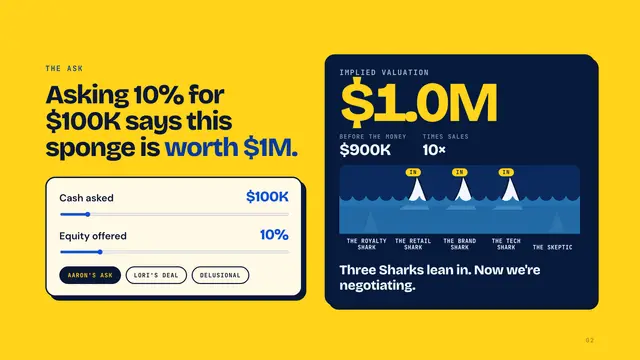
A smiley sponge, a $1M ask, and the deal the show is known for.
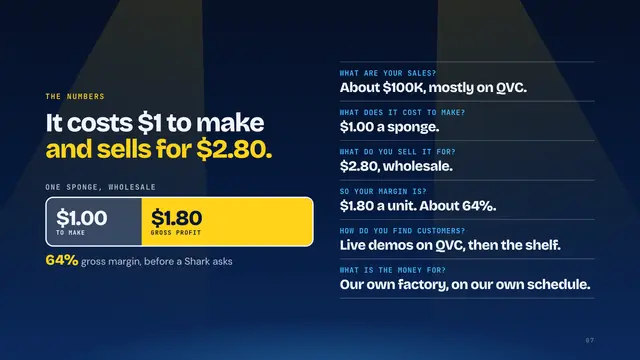
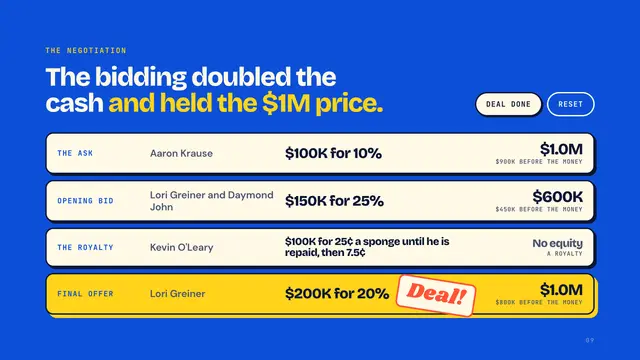
What to steal. Five minutes, the ask in the first sentence, a live demo, and the four numbers every Shark asks for: sales, cost, price and margin. Scrub Daddy asked $100K for 10%, took $200K for 20% from Lori Greiner, and has since sold more than $670 million.
- $100K for 10%
- Took $200K for 20%
- $670M+ sold
-
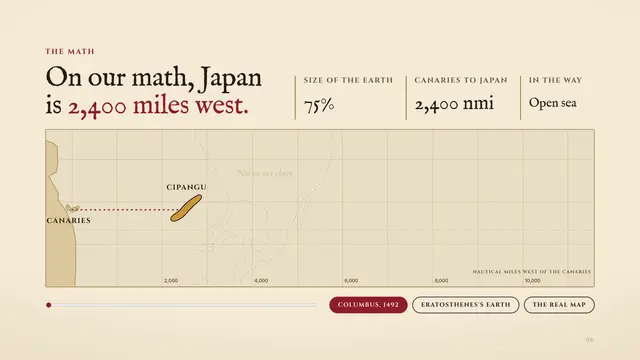
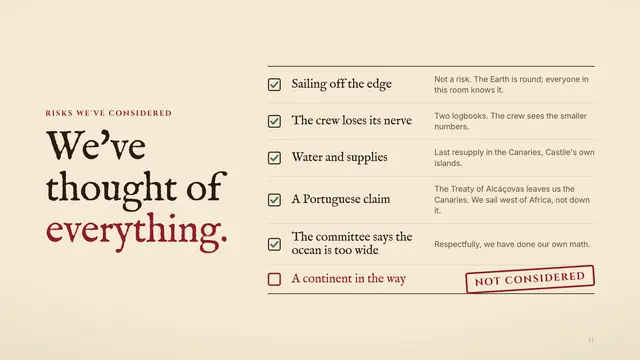
Christopher Columbus pitch deck (1492)
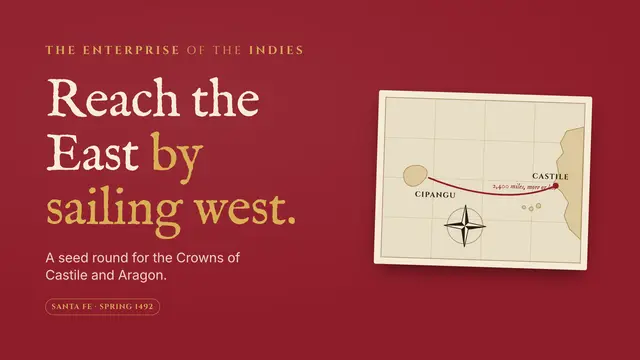
Asia is just west. Probably.
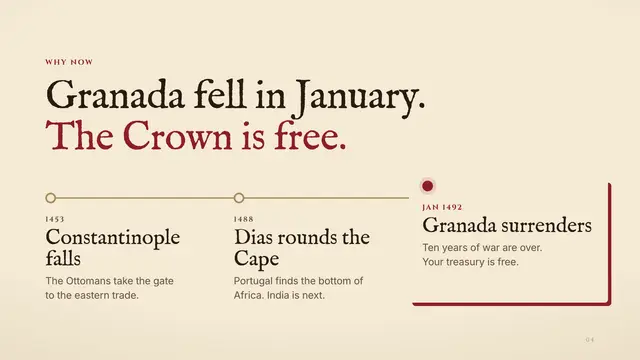
What to steal. A history deck with a real lesson: a why-now slide (Granada fell, so the Crown has budget), a slider on the one estimate everything rests on, and a risks slide that names every objection before the room does.
- 3 ships
- About 90 crew
- 10% of the take


The pitch deck template they share
Ten slides, one beat each, in this order. Give each one a headline that states the claim: "84M trips. A 10% fee. $2.1B a year." beats "Market size".
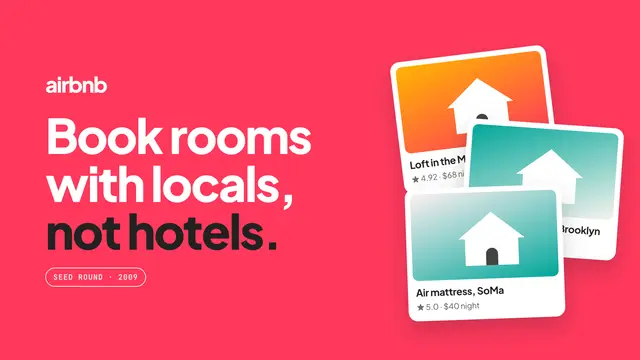
- 01 One-line promise What you do, in a sentence someone could repeat to a partner. See it in Airbnb's deck: "Book rooms with locals, not hotels."
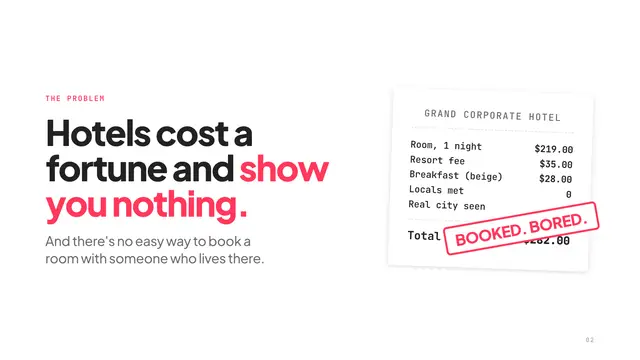
- 02 Problem Make the pain concrete: a price, a moment, a receipt. See it in Airbnb's deck: "Hotels cost a fortune and show you nothing."
- 03 Why now The shift that makes this possible today and not five years ago. See it in Uber's deck: "Your phone just learned where you are."
- 04 Solution and product Show the product doing its one main thing, start to finish. See it in Airbnb's deck: "Search, pick, book. Three taps."
- 05 Traction Your strongest number, with its trend. Lead with it if it is your best proof. See it in LinkedIn's deck: "What we promised, and what we delivered."
- 06 Market Size it bottom-up, customers times price, with the math showing. See it in Airbnb's deck: "84M trips. A 10% fee. $2.1B a year."
- 07 Business model How you make money and why the unit economics work. See it in Uber's deck: "Luxury on demand, profitable by design."
- 08 Competition Where you stand alone, and why others can't follow quickly. See it in Christopher Columbus's deck: "Portugal is going around Africa. We go straight there."
- 09 Team Why these people, one line each. See it in LinkedIn's deck: "People who've scaled networks before, backed by Sequoia."
- 10 The ask An amount, the milestone it buys, and when. See it in LinkedIn's deck: "$10M to turn the network into revenue."
Need the numbers for the market slide? Size it with the TAM SAM SOM calculator. Need the sentence for slide 1? Write it with the elevator pitch builder.
What investors look for, and the mistakes that get a deck skipped
- Investors skim: DocSend measured about 3.7 minutes per deck, and decks that fail are dropped in about 2. The first two slides decide whether the rest gets read.
- Every headline is a full-sentence claim, and each beat gets one slide, three at most (Y Combinator).
- Lead with your strongest proof, traction or team, whichever is stronger.
- Size the market bottoms-up (customers × price), with the math visible.
- The ask names an amount, the milestone it buys, and when.
- Topic-label headlines ("Market", "Team")
- A top-down TAM with no path to it
- Traction buried after the product tour
- An ask with no milestone
More famous decks founders study
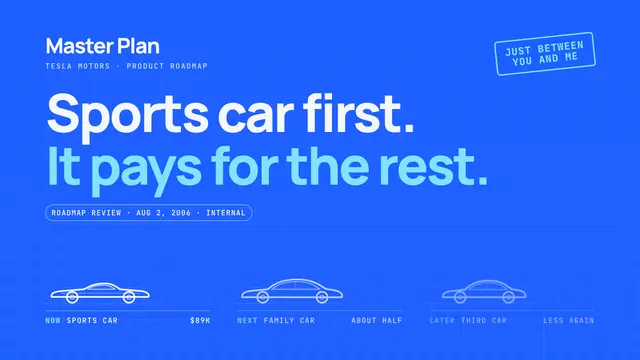
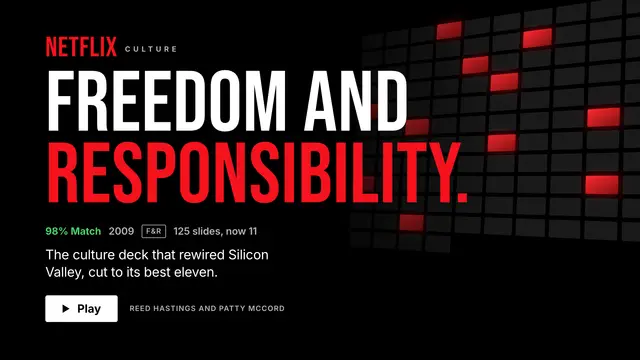
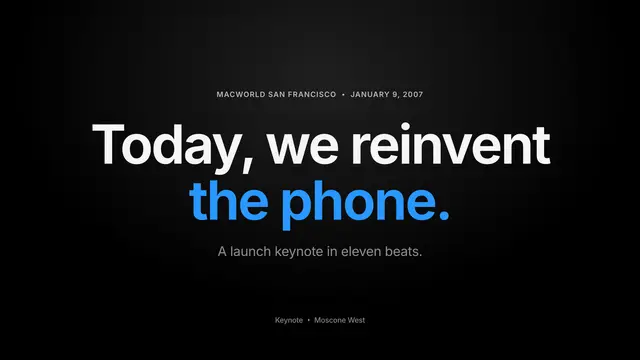
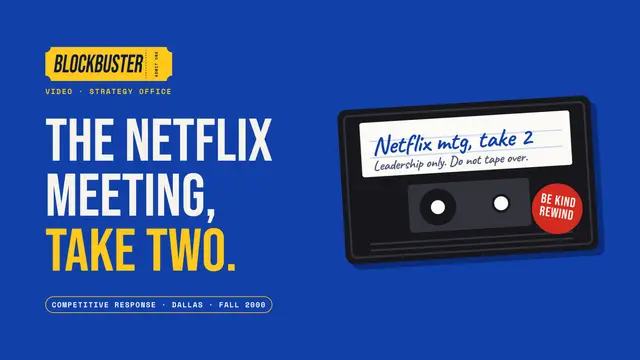
Not pitch decks, but famous for the same reason: one big claim, proved on stage.
Pitch deck questions
What should a pitch deck include?
A one-line promise, the problem, why now, the product, traction, the market, the business model, competition, the team, and the ask. Ten to fifteen slides covers it at seed. The template on this page shows each slide with a famous deck that does it well.
How many slides should a pitch deck have?
Pre-seed 8 to 12, seed 12 to 15, Series A 15 to 20, and growth rounds 18 to 25 plus a data appendix. Investors skim, so fewer, sharper slides beat more. Airbnb's seed deck was 14 slides; our rebuild makes the same case in 10.
What is the best pitch deck example?
Airbnb's 2009 seed deck is the most studied, because each slide does exactly one job. For a later round, LinkedIn's Series B deck shows how to report last round's promises against results, and Uber's 2008 concept deck shows how to pitch before there is a product.
Is there a free pitch deck template?
Yes. The template on this page is free to copy, and every example can be played and reused as a structure. Pitch Unfairly's free plan builds a deck from any of them in your own brand, at a link you can send.
What makes a pitch deck good?
Every headline states a claim instead of a topic, the strongest proof comes early, the market is sized from customers and price you can defend, and the ask names an amount and the milestone it buys.
What is the difference between a pitch deck and an elevator pitch?
An elevator pitch is the 30 to 60 second spoken version that earns the meeting. The pitch deck is what you send and present once you have it. The deck's first slide should be your elevator pitch in one sentence.
Make yours from these examples
Type your site. Pitch Unfairly builds the deck in your brand, in Claude, ChatGPT, Slack or the web, on the structure of the example you pick, and gives you a link to send.